_2.png "Shadows ReadyTheme")
Employee and visitor parking
- 12,000 lm heads on 30 ft poles
- About 8 per acre at 1 fc
- About 19 per acre at 2.5 fc
Take the campus site lighting off the meter. Solar parking lot and street lights carry their own panels and batteries, so there is no trenching across the campus, no new electrical service, and the lots stay lit through a grid outage.
Counts use the IES RP-20 planning figures: a 1 foot-candle average for a basic lot, 2.5 for enhanced security. A photometric layout settles the final design.
Each solar fixture replaces a wired LED fixture of about the same light output. Rate: the U.S. commercial average of 14.19¢ per kWh. Hours: 12 a night, every night. Use your own rate and schedule.
| Solar fixture | Wired equivalent | Per pole, per year | 100 poles | 250 poles |
|---|---|---|---|---|
| 100W or 120W, 10,000–12,000 lm | 100W LED shoebox, 11,000 lm | $62438 kWh | $6,21543,800 kWh | $15,538109,500 kWh |
| 200W, 30,000–34,000 lm | 300W LED shoebox, 33,600 lm | $1861,314 kWh | $18,646131,400 kWh | $46,614328,500 kWh |
Energy only, and only the site lighting: it does not change the facility's IT or cooling load. The other line item is the install, since solar lot lighting needs no trenching, conduit, wire pulls or new electrical service; we can price it against your site plan. Rate: U.S. Energy Information Administration, Electric Power Monthly, Table 5.6.A, commercial sector, June 2026.
Lots and roads first, then walkways, perimeter, poles and the build phase. Prices as of September 2026.
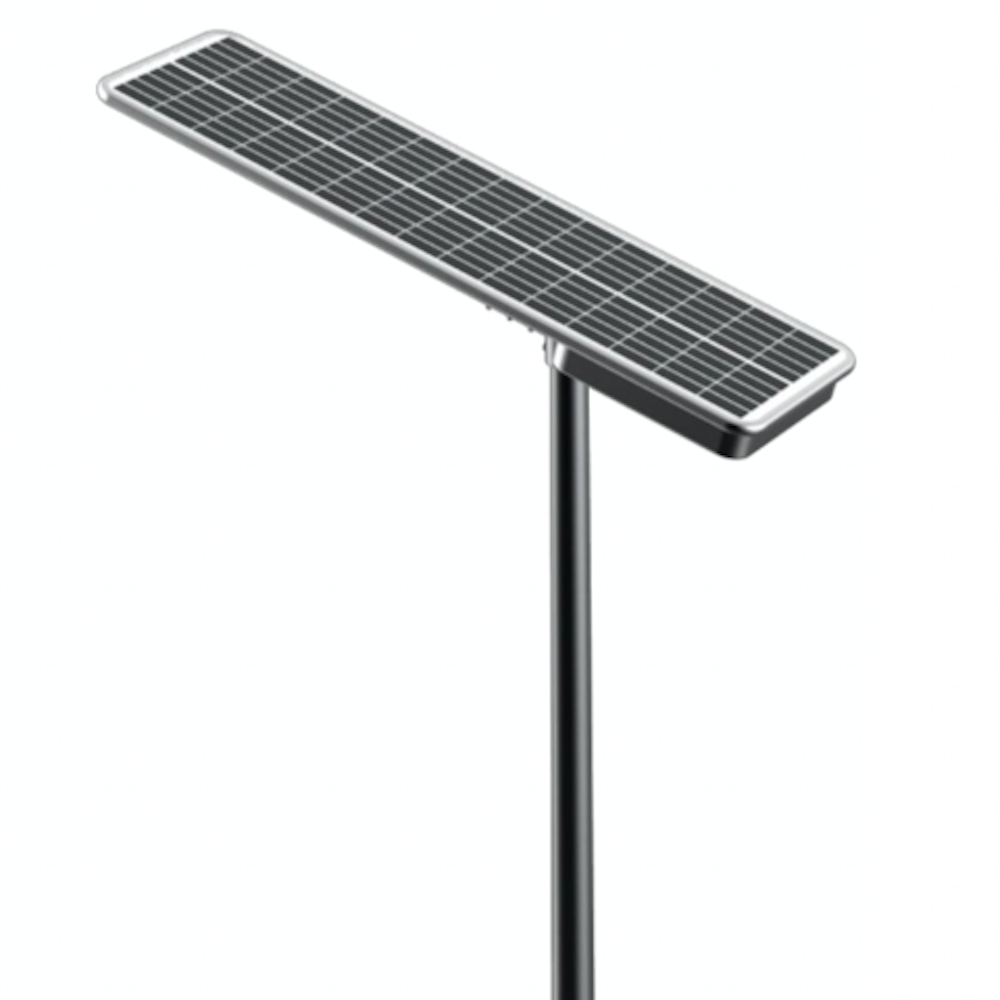
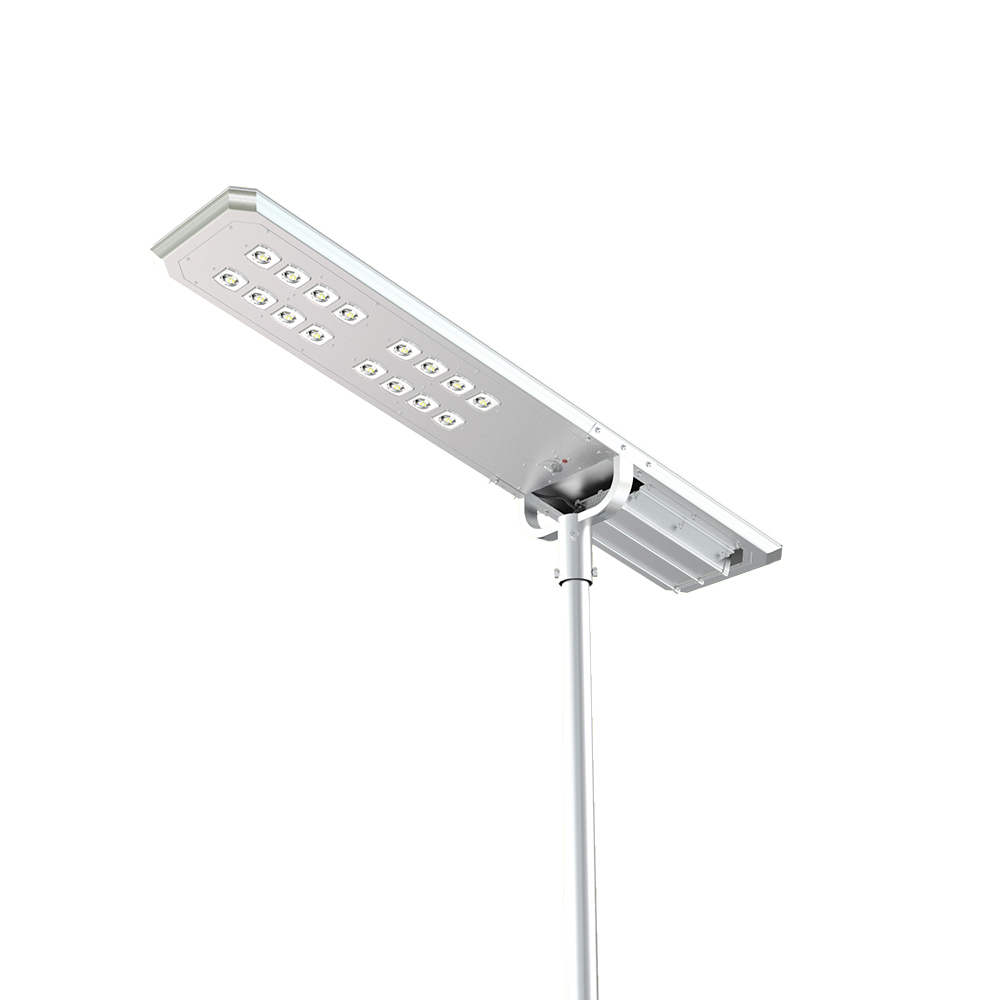
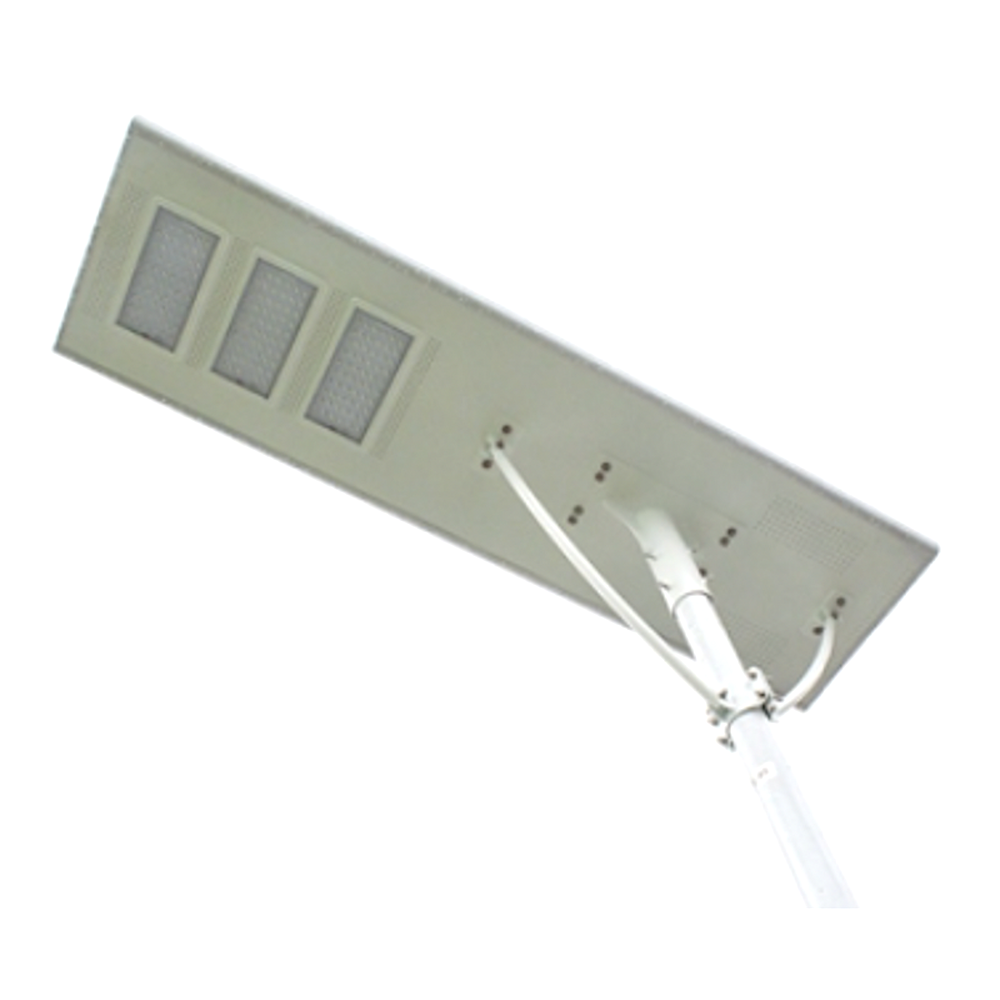
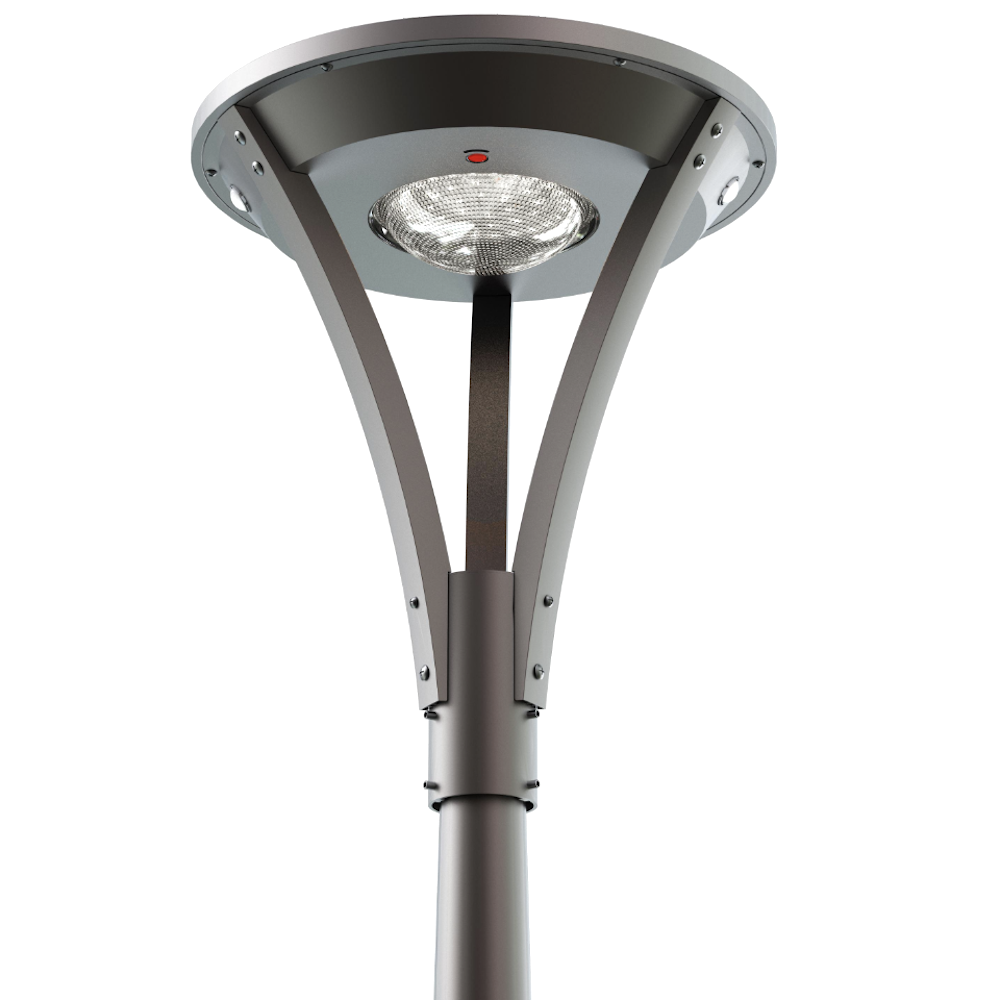
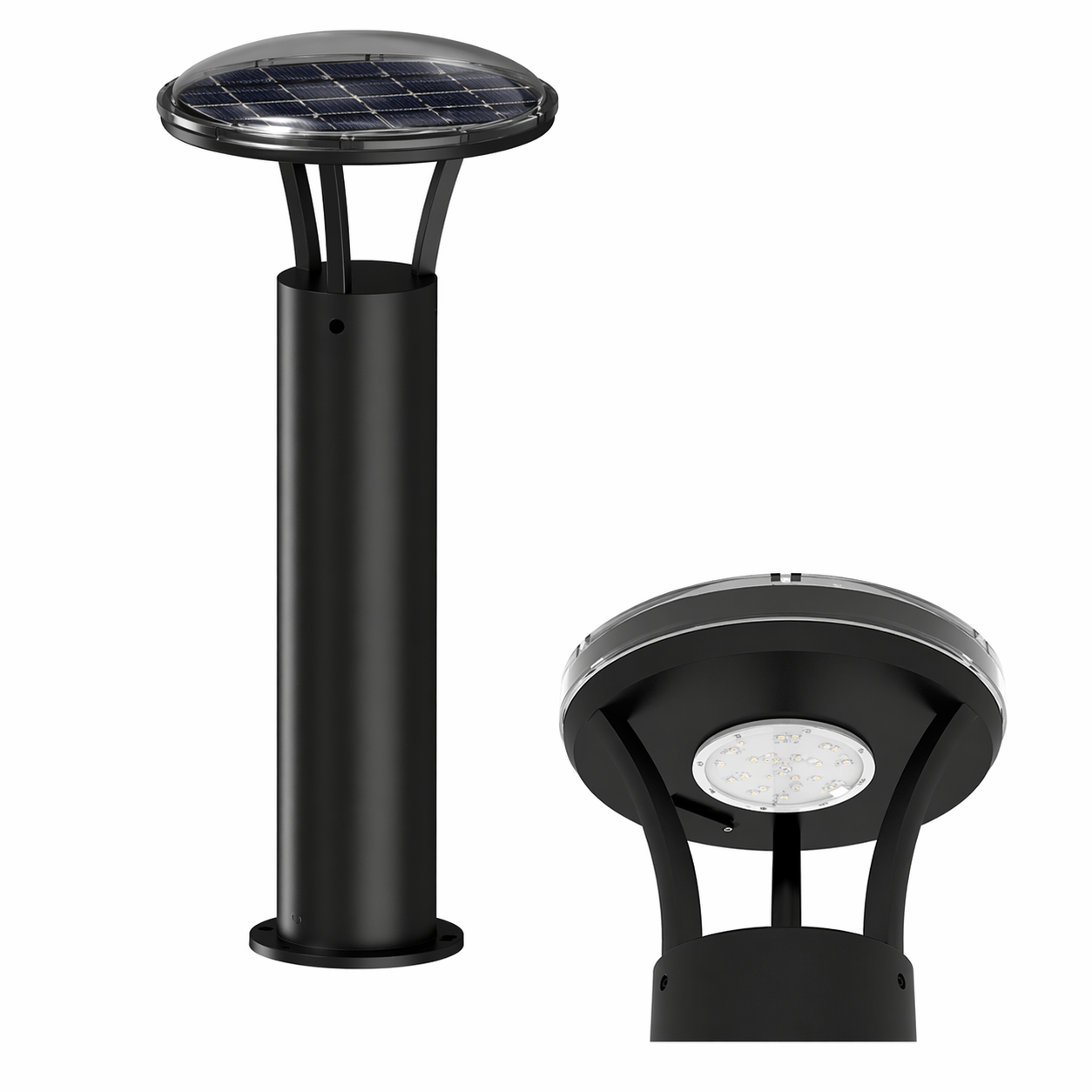
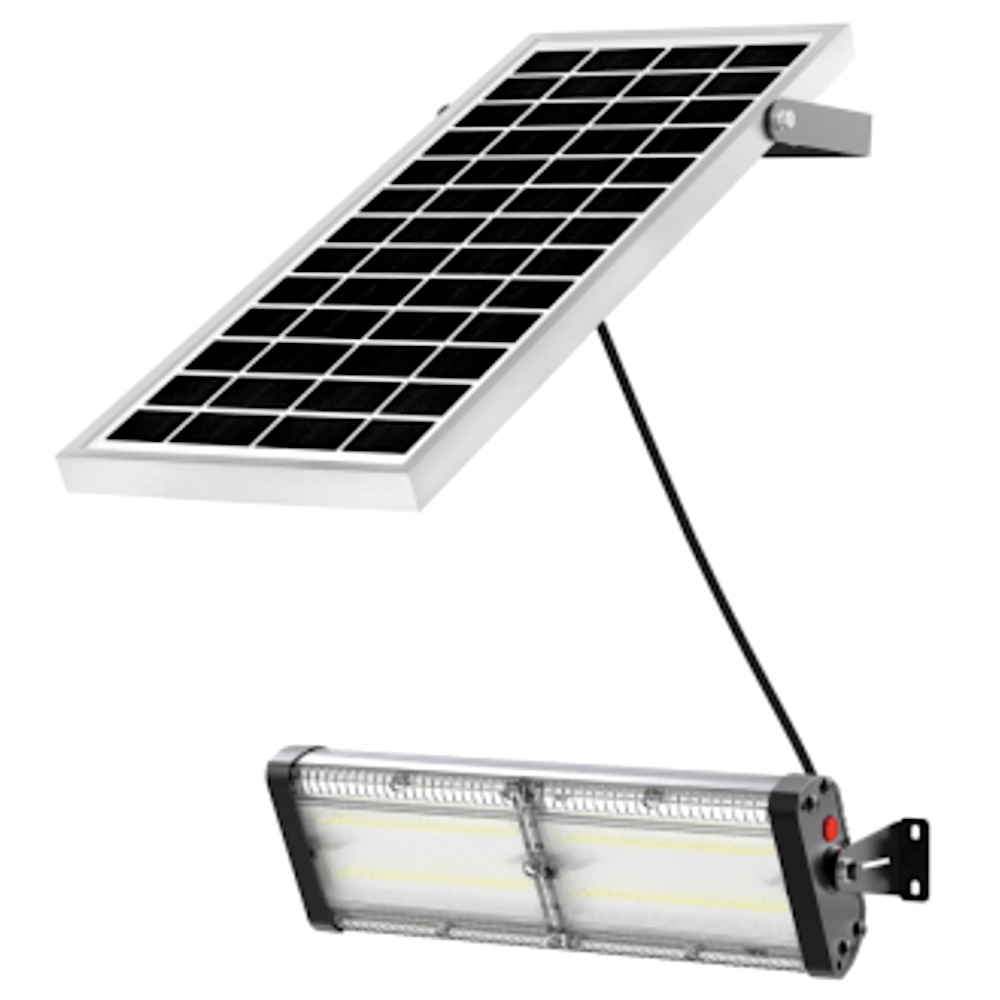
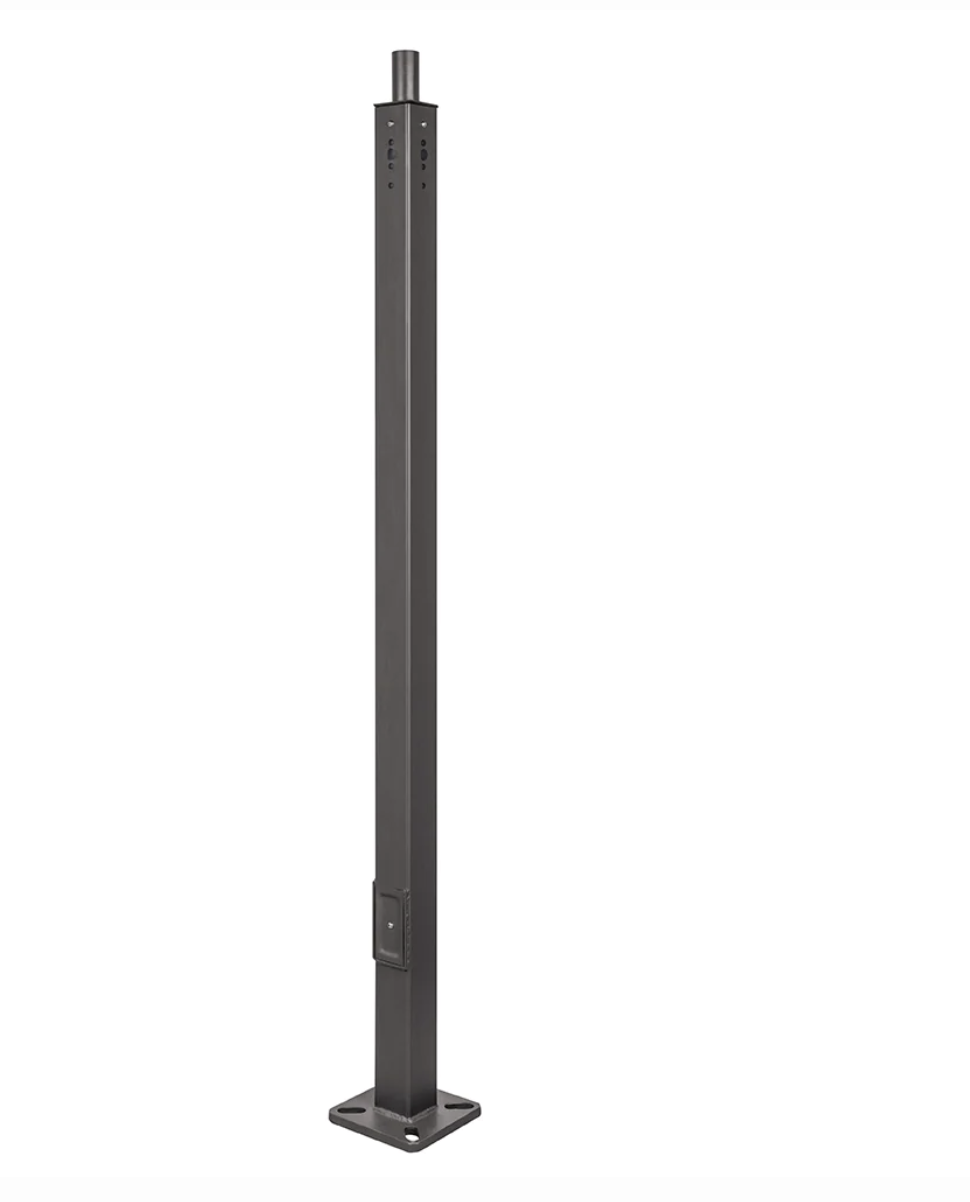
Poles and installation are sold separately. Lighting one lot rather than a campus? See solar parking lot lighting for fixture counts by lot size.
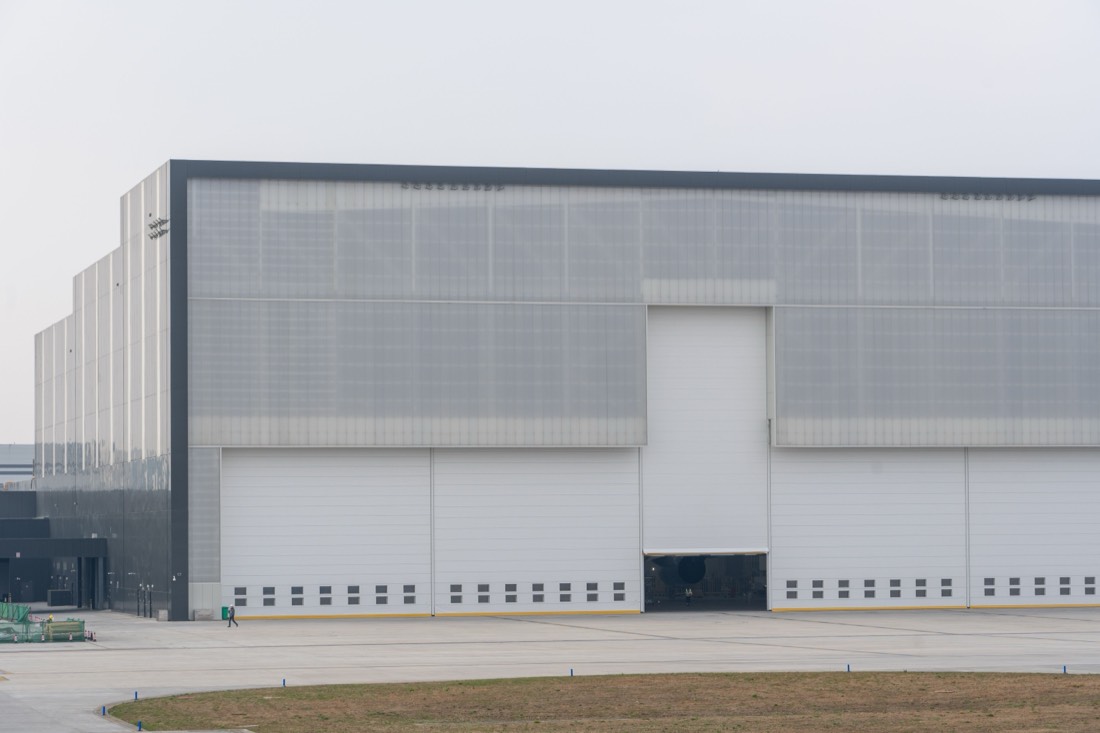
Every fixture carries its own panel and battery and switches on at dusk by itself. A utility outage does not darken the parking lots or access roads, and the site lighting never draws on your backup generators.
Batteries are a wear item, so plan for them: the parking lot fixtures carry a 3-year warranty, and we will give you the rated run time for each model before you order.
Site lighting that draws no grid power adds nothing to the facility's purchased-electricity (Scope 2) emissions.
On energy, about $62 a pole each year against a wired 100W LED fixture of similar output, at the U.S. commercial average of 14.19 cents per kWh and 12 hours a night. That is about $6,215 a year for 100 poles, or $18,646 if they are high-output 200W fixtures. Solar also removes the trenching, conduit and new service the site lighting would otherwise need. It does not change the facility's IT or cooling load.
Yes. Each fixture has its own solar panel and battery and runs independently of the grid, so the lots and access roads stay lit when utility power goes down, without drawing on the backup generators.
With 12,000-lumen heads on 30 ft poles, plan on about 8 fixtures per acre for a 1 foot-candle average, the IES RP-20 basic level, or about 19 per acre for the 2.5 foot-candle enhanced-security level. A photometric layout settles the final count.
It depends on the spec. For the IES RP-20 enhanced-security level, add fixtures and use the higher-output heads. If your security standard calls for more, send it with the site plan and we will tell you what solar can and cannot cover.
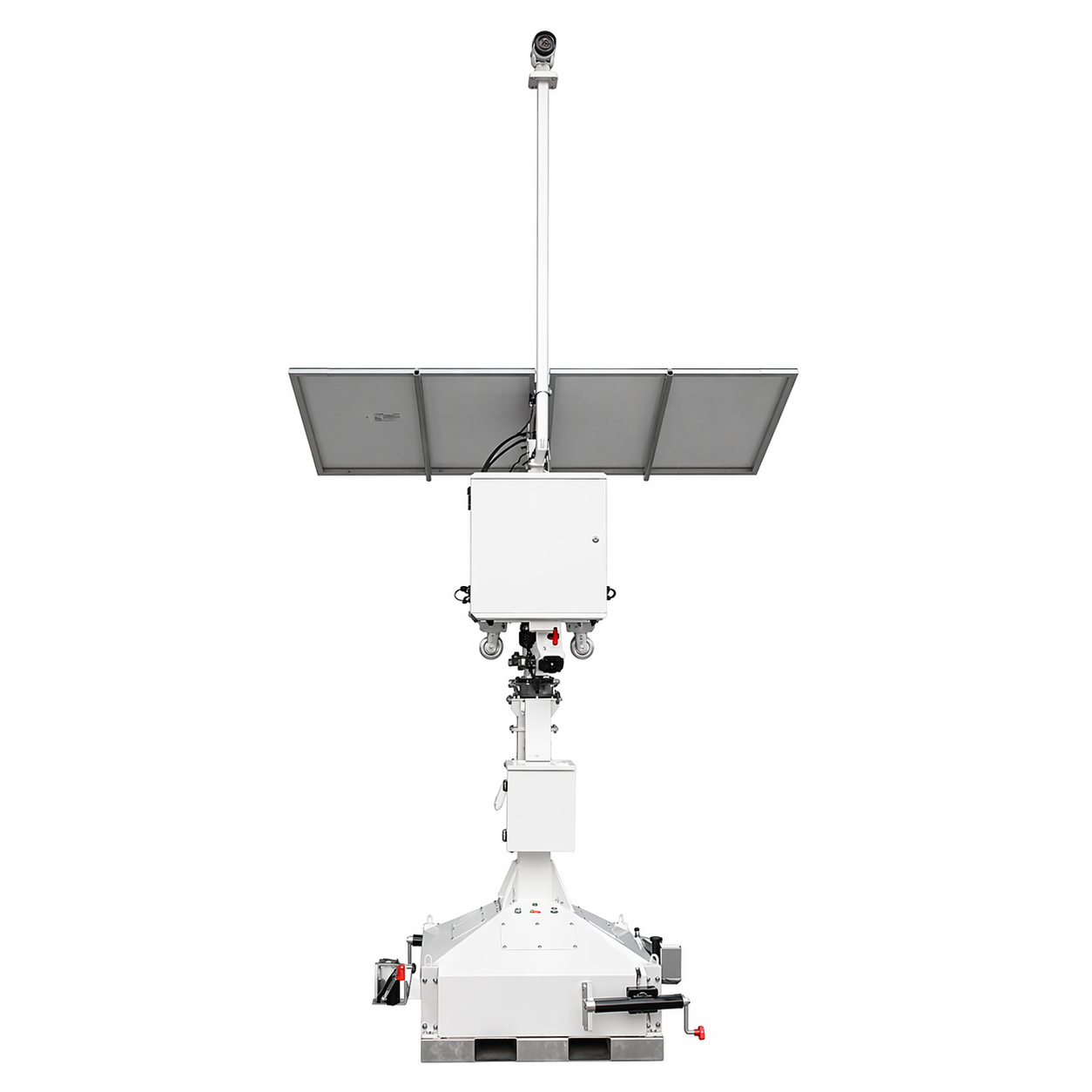
The Medi200 solar light tower puts out 30,000 lumens with no generator to fuel, and the Mini Pro solar camera tower adds three 4K cameras for site security while the campus is built.
Tell us the lot areas, the length of the access roads and the light level your spec calls for. We will come back with fixtures, counts and pricing for the whole campus.