My Cart: 0 item(s)
_2.png "Shadows ReadyTheme")
How to Light a Pickleball Court: Pole Height, Fixtures, Layout and Cost
Key Takeaways
- The American Sports Builders Association (ASBA) sets three lighting classes for pickleball. Recreational play needs 30 foot-candles average and 20 minimum on the court, with a maximum-to-minimum ratio no worse than 2.0. Club play needs 50 and tournament play 75.
- Four poles at 20 feet on the edge of the recommended playing area, about 6.5 feet outside the court sidelines and roughly in line with the baselines, with two LED fixtures on each pole, is the layout that hits those numbers on one court. A photometric model of that layout with eight 100-watt-class floods (20,000 lumens each, 60° lenses) averaged 31 foot-candles with a 1.8 max-to-min ratio.
- Plan on 800 to 1,000 watts of LED per court, about 150,000 lumens in total. LED replacements typically draw a third to half the power of the 1,000-watt metal halide fixtures older courts used.
- Pole height matters more than wattage. Fixtures below 18 feet shine into players' eyes on lobs and leave dark corners; 20 feet is the usual height, 18 to 25 the accepted range.
- Estimate $3,000 to $5,000 for fixtures, poles and brackets on a single court, and $7,000 to $15,000 installed once footings, trenching and the electrical run are included. Running it costs about $200 a year at four hours a night.
Pickleball has been one of the fastest-growing sports in the country for several years, and many new courts are conversions: a tennis court restriped for four pickleball courts, a corner of an HOA parking lot, a slab in a backyard. The lighting question comes up the first evening the court is busy at 7 p.m. and unusable at 7:30. This guide covers what the standards actually require, the pole and fixture layout that meets them, a real photometric model so you can see the numbers, and what it costs to build and run.
LED Lighting Solutions supplies the fixtures, poles and brackets used below.
What the pickleball lighting standards actually say
USA Pickleball does not publish its own light-level table. Its construction guidance says that because of the fast-moving nature of the game, lighting is key, that light should be spread uniformly across the area of play, and that glare should be minimized; for numbers it refers builders to the Pickleball Courts: Construction and Maintenance Manual it publishes with the American Sports Builders Association (ASBA). That manual, along with the Illuminating Engineering Society's sports lighting practice IES RP-6-24, is where the numbers live. The ASBA manual defines three categories of play:
| ASBA category | Level of play | Average horizontal foot-candles | Minimum foot-candles | Max-to-min ratio |
|---|---|---|---|---|
| Category III | Recreational: backyards, HOAs, parks, casual club play | 30 fc (about 320 lux) | 20 fc | 2.0 or better |
| Category II | Club and competitive league play | 50 fc (about 540 lux) | 40 fc | 2.0 or better |
| Category I | Tournament play | 75 fc (about 800 lux) | 60 fc | 1.7 or better |
Source: ASBA Pickleball Courts manual (2023) as summarized in industry lighting guides; IES RP-6-24. Broadcast-level courts run 100 fc and up, which comes from general sports broadcast practice rather than a pickleball-specific standard.
Two things in that table drive every design decision. The first is the minimum, not the average. A court that averages 35 foot-candles but has 12 in the corners fails, because the ball disappears exactly where a lob lands. The second is the uniformity ratio: the brightest point on the court divided by the darkest cannot exceed 2.0. A small 20-by-44-foot court with a fast ball is unforgiving of dark spots, which is why the number of fixtures and where you aim them matters as much as how bright they are.
Almost every private and community court is Category III. Build to 30 foot-candles with a 20 minimum and you will have a court that plays well after dark and satisfies an HOA board or parks department that asks for a photometric plan.
The area you are lighting is bigger than the court
The playing lines of a pickleball court are 20 by 44 feet. USA Pickleball recommends a minimum total playing area of 30 by 60 feet and prefers 34 by 64 feet, so players have room to chase balls behind the baseline and outside the sidelines. That 34-by-64-foot pad (about 10 by 20 meters) is the surface the lighting design has to cover. USA Pickleball recommends keeping light poles at least 5 feet from the sidelines, centered on or just outside the fence or court, never doubling as fence posts, and padded if they end up inside the fence.
On a converted tennis court the math changes. A 60-by-120-foot tennis court holds four pickleball courts, and the existing tennis poles are often already in roughly the right places. That is a retrofit, covered briefly at the end of this guide.
A real single-court layout, with the photometric numbers
Rather than quote rules of thumb, here is a layout we modeled in DIALux, the photometric software lighting engineers use to prove a design before anything is installed. The model is a 10-by-20-meter court pad, which is the USA Pickleball preferred playing area.
Plan view of the modeled layout (poles drawn slightly outside the pad for clarity; in the model they sit on its edge). Each pole carries two fixtures, one aimed at the near end of the court and one at the center, so every point is lit from more than one direction.
| Design input | Value in the model |
|---|---|
| Court pad | 10 m × 20 m (about 34 × 64 ft) |
| Poles | 4, mounting height 6 m (20 ft) |
| Pole placement | On the long edges of the 10 × 20 m pad, which is about 2 m (6.5 ft) outside the court sidelines; 12 m (39 ft) apart along the court, about 4 m (13 ft) in from each end of the pad, so each pole sits roughly in line with a baseline |
| Fixtures | 8 LED floods, 2 per pole, 100 W class (119.5 W input in the luminaire file), 20,136 lumens each, 60° lens |
| Aiming | Each fixture tilted 31° to 46° below horizontal and rotated toward the court; one head per pole is aimed at the near end of the court, the other at the center |
| Total connected load | 956 W |
| Maintenance factor | 0.80, so the results below are maintained values after lumen depreciation and dirt, not day-one values |
| Result on the court surface (13 × 7 point grid) | Modeled value | ASBA Category III target |
|---|---|---|
| Average illuminance | 335 lux (31.1 fc) | 30 fc or more: met |
| Minimum illuminance | 242 lux (22.5 fc) | 20 fc or more: met |
| Maximum illuminance | 428 lux (39.8 fc) | No separate target; limited by the ratio below |
| Max-to-min ratio | 1.77 | 2.0 or lower: met |
| Uniformity (min ÷ average) | 0.72 | Not specified by ASBA; shown for reference |
Source: LED Lighting Solutions DIALux photometric report, exterior scene, calculation grid on the 20 × 10 m playing area. Lux to foot-candles: divide by 10.76.
The value chart in that report shows why two fixtures per pole matter: the brightest zone is the middle of the court where all four poles overlap, and the lowest readings (242 to 270 lux) fall along the edges of the pad midway between the poles and at the center of each baseline. Inside the court lines, the darkest point is about 246 lux, or 23 foot-candles, at the center of each baseline. With one fixture per pole the light roughly halves, and the court would fall well below the 20-foot-candle minimum.
If you need Category II club levels (50 fc), stepping the same eight fixtures up to 200 watts would raise the modeled average to roughly 50 foot-candles, though uniformity would need to be re-checked in the model. That is the advantage of selectable-wattage fixtures: you can build the poles once and change the light level with a switch on the driver.
Pole height and placement
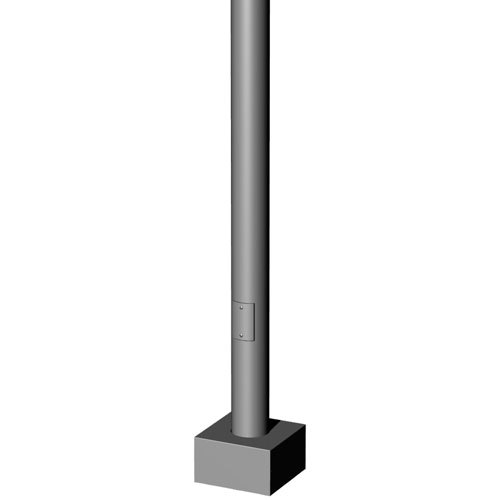
20 feet is the usual height for a single dedicated pickleball court. Industry guides put the accepted range at 18 to 25 feet, and USA Pickleball's construction guidance describes mounting heights of 20 to 26 feet, with the higher end for multi-court complexes. Two things go wrong below 18 feet. Fixtures end up close to eye level for a player looking up at a lob, so glare becomes the complaint rather than darkness. And the beam has to spread wider to cover the court, which means more light spills sideways into the neighbors' yards and less lands on the surface. Some backyard kits use 15-foot poles with the fixtures on the court ends, but plan on 20 feet if the court is for anyone but the owner.
Keep poles out of the playing area. USA Pickleball asks for at least 5 feet between the sideline and any light pole; the modeled layout puts them on the edge of the 34-foot-wide pad, about 6.5 feet outside the court sidelines. If a fence surrounds the court, put the poles on the outside of the fence and you remove the collision hazard entirely.
Two poles or four? Two-pole kits with two fixtures per pole are widely sold for single courts and cost less in footings and trenching. They can meet the recreational numbers: one supplier's two-pole design with the poles on the court ends reports 32 foot-candles at a 1.86 max-to-min ratio. Four poles, as modeled above, gives more margin on uniformity and is the usual choice for a community or club court. Poles on the court ends instead of the sides are a good choice when the court sits beside a house and you want the light aimed away from windows.
Poles are the part of the job most likely to need an engineer's sign-off. An anchor-base aluminum pole bolts to a poured concrete footing sized for your wind zone; the 20-foot pole above ships with galvanized anchor bolts, a hand hole for the wiring, and a 2 3/8-inch tenon that accepts standard slip-fitter fixtures and brackets. Browse the full range of light poles.
How many fixtures and how many watts
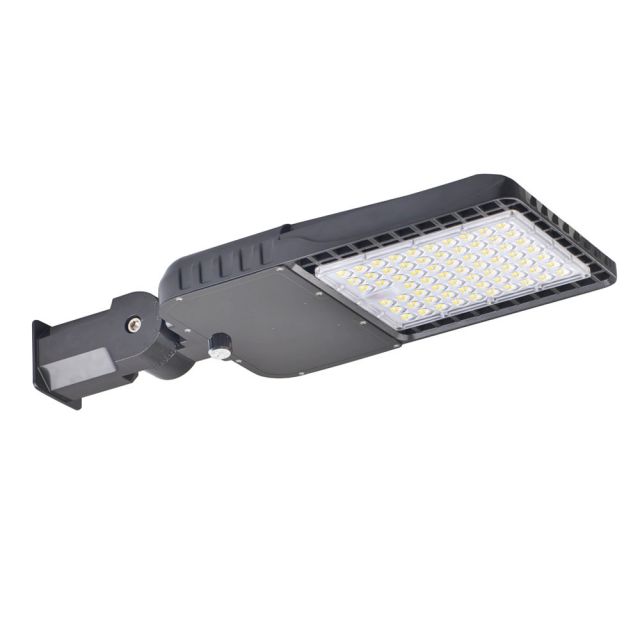
Work from the total lumens the court needs, then divide by fixtures. Lighting a single court to Category III takes roughly 130,000 to 160,000 fixture lumens once you allow for fixture aging and the light that lands outside the pad, which is why the model uses eight fixtures of about 20,000 lumens each. In watts, that is 800 to 1,000 watts of LED per court. For retrofits, a 300 to 500 W LED flood replaces a 1,000 W metal halide fixture and a 150 to 200 W LED replaces a 400 W metal halide, so LED cuts the connected load by half to two thirds.
| Target | Fixtures per court | Wattage per fixture | Total LED watts | Metal halide equivalent |
|---|---|---|---|---|
| Category III recreational, 30 fc | 8 (2 per pole × 4 poles) | 100 to 150 W | 800 to 1,000 W | About 2,000 to 3,000 W |
| Category III on a 2-pole backyard court | 4 (2 per pole × 2 poles) | 150 to 200 W | 600 to 800 W | About 1,500 to 2,500 W |
| Category II club, 50 fc | 8 to 12 | 150 to 200 W | 1,200 to 1,800 W | About 3,000 to 5,000 W |
Fixture counts and wattages are estimates scaled from the modeled court, assuming fixtures at 140 lm/W or better and a 0.8 maintenance factor; metal halide equivalents use the 2-to-3-times replacement ratio common in LED retrofit guidance. Every court is different; a photometric layout for your specific court replaces these estimates with real numbers.
The fixture in the model is a 100 W class sport flood with a 60° lens. It is not listed on this website, so ask us for it by that spec. For wattage and lumens, our adjustable 80 to 150 W shoebox (19,500 lumens at 150 W, slip-fitter mount, 4000 K or 5000 K switch) and the 100 to 200 W selectable LED flood (15,600 to 30,000 lumens) cover the same range, and the flood's top setting is what takes the same poles toward club levels. Both use wide 118° to 120° optics rather than the model's 60° lens, so a court built with them needs its own photometric check.
Choosing the fixture: optics, color, glare
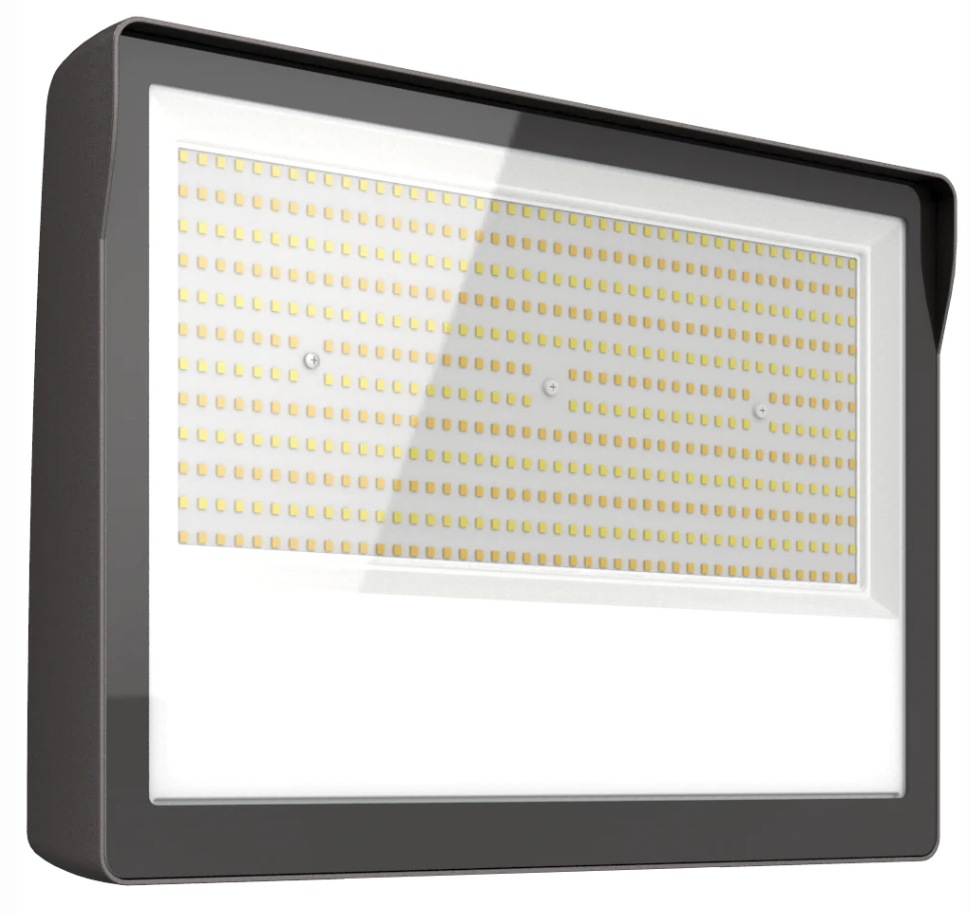
- Optics. The model uses a 60° lens on each fixture, tilted 31° to 46° below horizontal, which puts the beam on the court from a 20-foot pole instead of on the ground under the pole or over the fence. That is the recommendation for a dedicated court. Wide 110° to 120° floods are the common stock item and can work with more fixtures or closer poles, but they spill more; very narrow spot optics go the other way and create hot spots and dark corners. Whatever the lens, the photometric plan is what proves the uniformity ratio.
- Color temperature. 4000 K to 5000 K is the range used on outdoor courts. 5000 K reads crisper for tracking the ball; 4000 K is warmer and is what many HOAs prefer next to homes. The adjustable fixtures above let you pick after installation.
- Color rendering. A CRI of 70 is adequate and 80 is better; the ball's neon yellow or green needs to read as bright against a green or blue court.
- Glare and spill. Aim fixtures the way the model does, 30° to 45° below horizontal, so the beam lands on the court rather than beyond it, and add house-side shields on any pole that faces a neighbor. Many cities and HOAs limit spill light at the property line; a photometric plan will show whether you meet the local limit.
- Controls. A photocell plus a timer or an occupancy sensor keeps the court dark after hours, which can be an HOA or permit condition and keeps the power bill down.
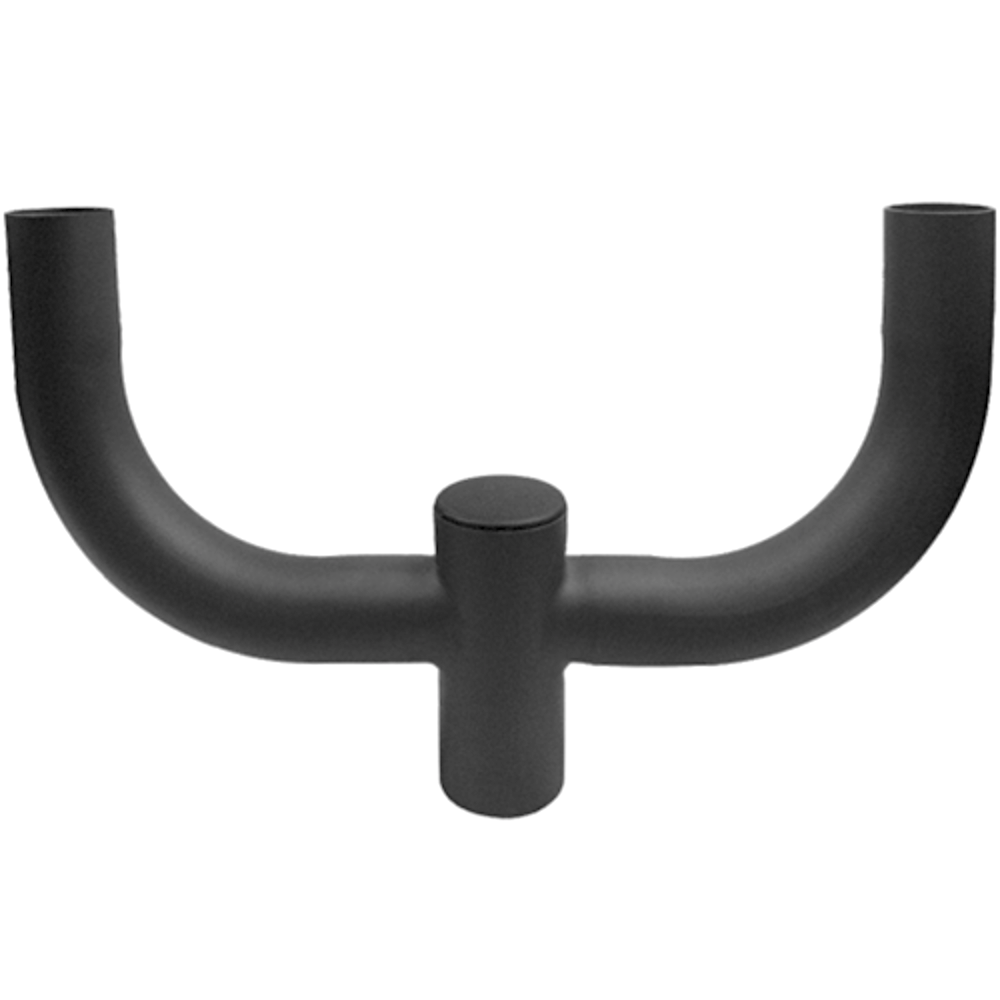
- Mounting. Two fixtures per pole need a bracket. A double bullhorn bracket on the pole's tenon takes two slip-fitter fixtures and lets each be aimed independently.
What pickleball court lighting costs
| Item, single court, 4-pole layout | Typical range | Notes |
|---|---|---|
| 8 LED fixtures, 100 to 200 W | $1,100 to $1,300 | Adjustable shoebox $139.99; selectable flood $154.99 each at current pricing |
| 4 anchor-base aluminum poles, 20 ft | $1,600 to $3,200 | Priced by quote; steel poles run lower, decorative poles higher |
| 4 double bullhorn brackets | $320 | $79.99 each |
| Hardware subtotal | $3,000 to $5,000 | Comparable packaged court kits sell for $2,800 to $9,600 |
| Footings, trenching, conduit, wire, panel work, labor | $4,000 to $10,000 | Varies most with distance to power and soil; this is usually the larger half of the job |
| Installed total | $7,000 to $15,000 | Two-pole backyard courts land at the low end; club courts with 12 fixtures at the high end |
Hardware prices from ledlighting-solutions.com as of September 2026. Installation ranges are estimates for planning; get a local electrical quote.
Operating cost is small. The modeled court draws 956 watts. At four hours a night year-round that is about 1,400 kilowatt-hours, or roughly $200 a year at $0.15 per kWh. A timer that shuts the court off at 10 p.m. is what keeps it there.
Solar, portable and other shortcuts
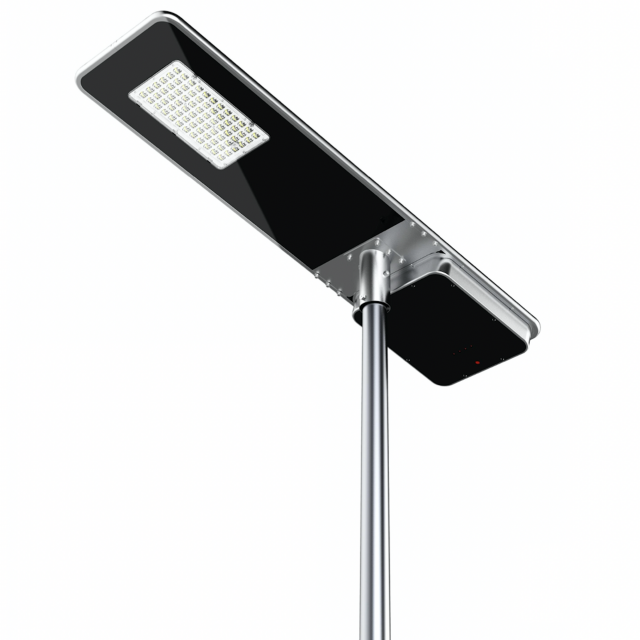
Solar is tempting on a court with no power nearby, and it is the right answer for the walkways, seating and gate around the court. It is the wrong answer for the court itself if you want Category III light. A 100-watt solar street light delivers about 10,000 lumens and runs at full output for five hours, so four of them on the court corners give roughly a quarter of the light the wired layout does: enough for a casual hit-around, not enough for a court people book. The same is true of portable tripod lights. If the court is far from power, the trenching cost is what solar avoids; weigh it against playing at a quarter of the recommended level.
A solar LED flood light at 6,000 lumens is a good fit for the fence line, the bench area and the path from the parking lot, where it keeps players out of the dark without a second trench.
Retrofitting a tennis court for pickleball
A tennis court converted to four pickleball courts usually keeps its poles. The job is to replace the 1,000-watt metal halide heads with LED (a 300 to 450 W selectable flood replaces each one), re-aim them for the new court lines, and add fixtures where the pickleball nets now fall between the old aiming points. Because recreational tennis lighting is designed to similar foot-candle levels, a well-done retrofit can land the pickleball courts at Category III without new poles. Ask for a photometric plan that shows all four courts; the middle two are the ones that come up short.
Sizing a court? Tell us the pad dimensions, where power is, and whether the court is for recreational or club play, and our team will recommend fixtures, poles and brackets and quote the order. Contact us or call 888-925-1966. Most orders ship within 24 hours from Murrieta, CA or Fairburn, GA.
Frequently asked questions
How many foot-candles does a pickleball court need?
For recreational play the ASBA standard is 30 foot-candles average with a 20 foot-candle minimum and a max-to-min ratio of 2.0 or better. Club play needs 50 average and 40 minimum; tournament play needs 75 and 60.
How tall should pickleball court light poles be?
20 feet is the usual height for a single outdoor court; industry guides accept 18 to 25 feet and USA Pickleball describes 20 to 26 feet. Shorter poles put the fixtures in players' sightlines on lobs and spread more light off the court. Converted tennis courts often keep their existing poles.
How many lights does a pickleball court need?
Four to eight. The layout that meets the recreational standard with margin is four poles with two fixtures each. A two-pole backyard court uses four fixtures with wider optics and lands closer to the minimums.
How many watts and lumens do I need to light a pickleball court?
About 800 to 1,000 watts of LED per court, or roughly 130,000 to 160,000 fixture lumens. The photometric model in this guide used eight 100-watt-class fixtures at about 20,000 lumens each with 60° lenses (956 watts total in the luminaire file) and averaged 31 foot-candles.
Where should the poles go?
Outside the court lines and off the playing surface. The modeled layout places four poles on the edge of the 34-by-64-foot playing area, about 6.5 feet outside the court sidelines and 39 feet apart along the court, roughly in line with the baselines. If the court is fenced, put the poles outside the fence. Poles on the court ends are used when a house sits along one side.
What color temperature is best for pickleball court lights?
4000 K to 5000 K. 5000 K makes the ball easiest to track; 4000 K is warmer and less intrusive next to homes. Adjustable-Kelvin fixtures let you change it after installation.
How much does it cost to light a pickleball court?
Fixtures, poles and brackets for a four-pole court run $3,000 to $5,000. With footings, trenching, wiring and labor the installed total is typically $7,000 to $15,000. Running the lights costs about $200 a year at four hours a night.
Can I light a pickleball court with solar lights?
Not to the recreational standard. Four 100-watt solar street lights give roughly a quarter of the required light and run full output for about five hours. Solar is a good fit for walkways, seating and the fence line, or for casual play where trenching to power is impractical.
Do I need a photometric plan?
Many cities and HOAs ask for one with a permit application, and it is the only way to know the court will meet the minimums and any spill-light limit before you pour footings. Lighting suppliers and electrical engineers produce them in software such as DIALux or AGi32.
Sources
- USA Pickleball, Courts and Construction: playing area, lighting and pole placement guidance
- USA Pickleball, Pickleball Court Lighting
- American Sports Builders Association, Pickleball Courts: A Construction and Maintenance Manual (2023), lighting categories, as summarized in 1st Source Lighting's pickleball lighting guide
- Illuminating Engineering Society, IES RP-6-24, Recommended Practice: Sports and Recreational Area Lighting
- LED Lighting Solutions, DIALux photometric report for a 20 × 10 m court, 4 poles at 6 m, 8 × 100 W class luminaires (119.5 W in the file, 20,136 lm, 60° lens), October 2022