_2.png "Shadows ReadyTheme")
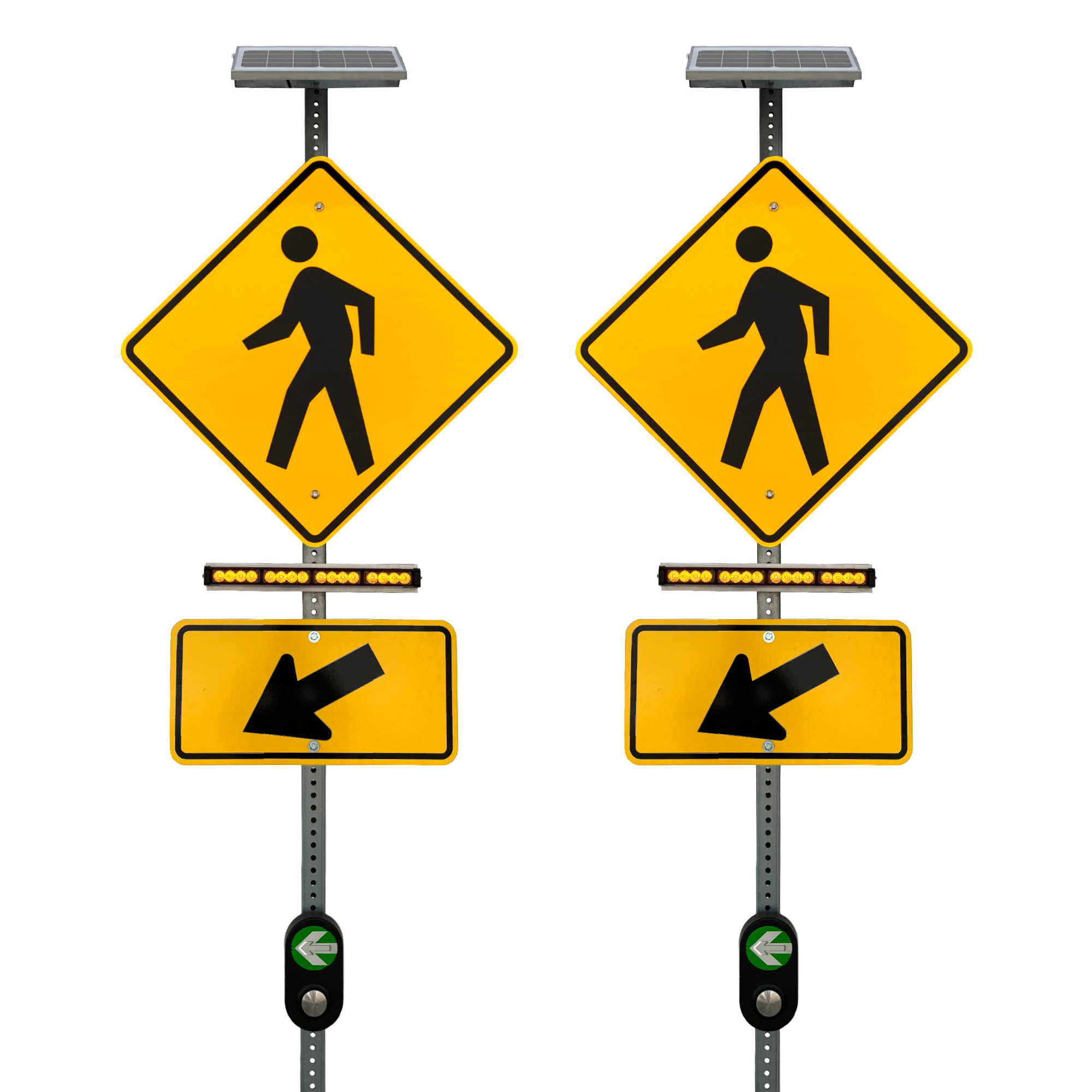
One-direction crossing
- 2 beacons, one each side
- 2 crossing signs, 2 arrow plaques
- 2 push-button signs
- About $2,720 in hardware
Everything one crossing needs: solar rectangular rapid flashing beacons, push buttons, and the crossing signs and plaques MUTCD Chapter 4L calls for. Pick your street, we price the whole crossing.
Chapter 4L puts an assembly on both sides of the road for every approach. Totals are hardware only, before posts and installation.
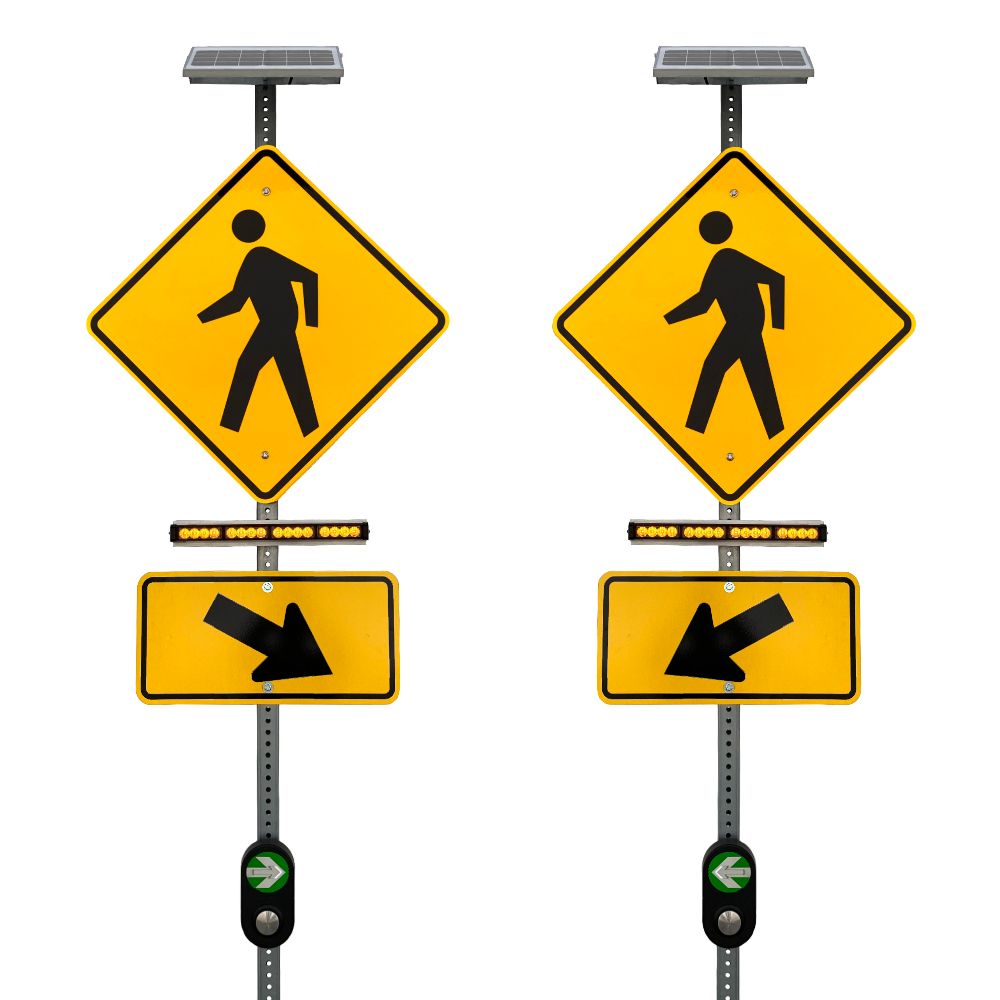
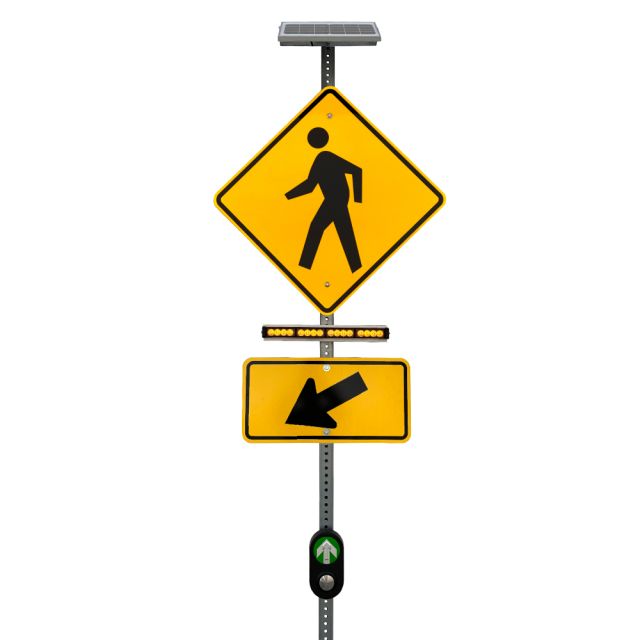
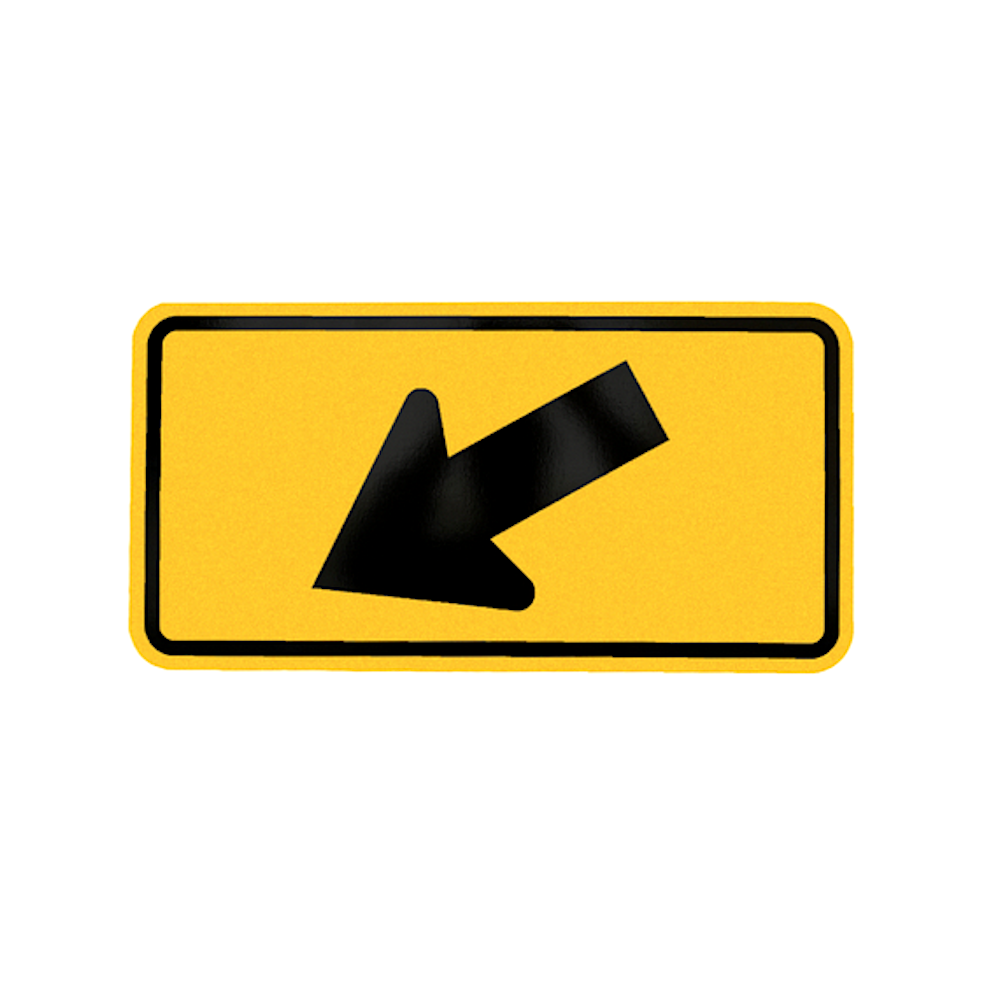
Each post carries a crossing sign, the beacon under it, a W16-7P arrow under that, and an R10-25 sign by the button. Prices as of September 2026.


School crossing? Swap the W11-2 for an S1-1 school crossing sign (from $56.99). Kits do not include posts; the standard hardware fits 3 to 4 in posts.
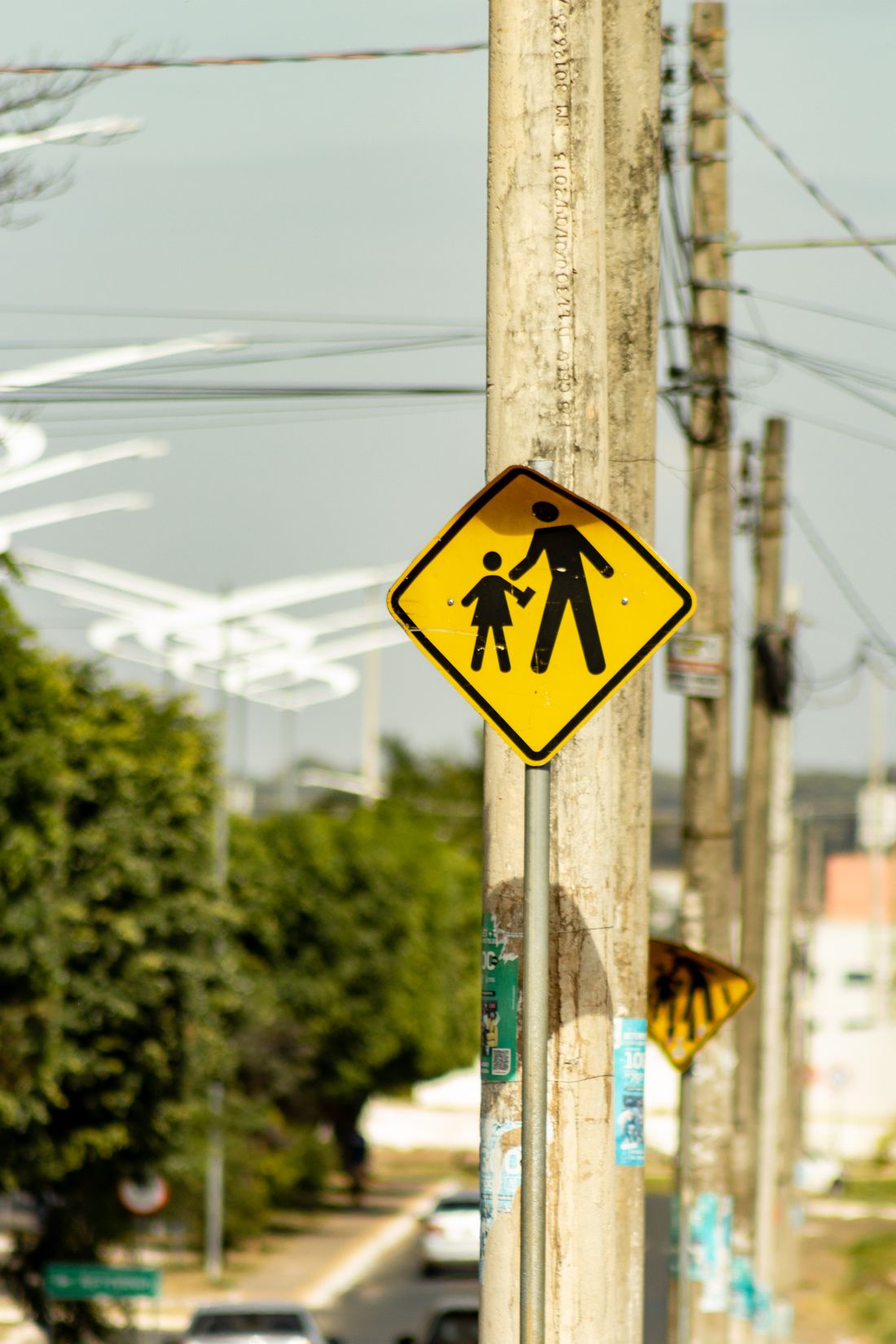
That is the order MUTCD Section 4L.02 calls for: crossing sign on top, beacon under it, W16-7P arrow below. The beacon bands to the existing sign post, with the control box behind it and the solar panel at the top. No conduit, no trench and no power drop, so most crossings go in with a bucket truck and hand tools.
Press the button on either side and both beacons flash together, then stop 60 seconds later. A full charge runs up to 12 hours of flashing.
FHWA lists the RRFB as a Proven Safety Countermeasure, and the MUTCD 11th Edition gives it its own chapter. Our complete RRFB guide walks through the placement rules, costs and installation.
Sources: FHWA Proven Safety Countermeasures, Rectangular Rapid Flashing Beacons (FHWA-SA-21-053); MUTCD 11th Edition, Chapter 4L.
Only at a marked crosswalk on an uncontrolled approach, supplementing a W11-2 pedestrian, S1-1 school or W11-15 trail crossing sign. Not where a STOP sign, YIELD sign, signal or pedestrian hybrid beacon already controls the approach, except at roundabout crosswalks and free-flow turn lanes separated by an island.
For hardware, about $2,720 for a one-way street and $3,898 for a two-way street, including the crossing signs, arrow plaques and push-button signs. Posts and installation depend on the site.
Yes. Chapter 4L calls for two assemblies per approach, one on the right and one on the left, or in the median on a divided road. On a two-way street each post carries beacons facing both directions.
Our systems flash for 60 seconds after each press, and pressing again restarts the timer. The MUTCD ties the flash time to how long a pedestrian needs to cross, so tell us the crossing width when you order.
An RRFB is a yellow warning beacon under a crossing sign and does not stop traffic. A HAWK, or pedestrian hybrid beacon, hangs over the road and shows red. RRFBs suit multilane crossings under 40 mph; faster, wider roads may need a HAWK. We supply RRFBs, not HAWKs.
Send the street type, the sign you need (pedestrian, school or trail) and the sign size. We will come back with the beacons, signs and plaques for the whole crossing.