My Cart: 0 item(s)
_2.png "Shadows ReadyTheme")
How to Become a Traffic Safety and Solar Lighting Distributor
Key Takeaways
- To become a distributor, form a business, get an EIN, register for a seller's permit or sales tax number in your state, choose your product lines and customers, then open an account with a supplier that gives distributor pricing.
- In California both wholesalers and retailers need a seller's permit, and you buy for resale with a resale certificate (CDTFA-230). In Georgia you hold a sales tax number and give suppliers Form ST-5.
- Traffic safety buyers bid against rules. Signs follow the MUTCD, and work zone devices made after December 31, 2019 must be crash tested to MASH for federal-aid work.
- On federal-aid projects obligated on or after October 1, 2026, permanently installed manufactured products must be made in the U.S. with more than 55 percent U.S. content by component cost.
- Pick a supplier for breadth, stock close to your customers, American-made options and compliance paperwork, not price alone.
To become a distributor, you buy products from a manufacturer or supplier at distributor pricing and resell them to contractors, agencies and businesses at a markup. The setup is the same in any industry: form a business, get an EIN, register to collect sales tax so you can buy for resale tax free, and open supplier accounts. In traffic safety, solar lighting and signs there is one more step that decides whether you win bids: knowing the rules your customers buy against, from the MUTCD to crash testing and Buy America. This guide walks through every step, with the official sources, and ends with what to look for in a supplier.
This is a practical overview, not legal or tax advice. Licensing and tax rules vary by state, so confirm the details with your state tax agency or an accountant.
What a traffic safety and solar lighting distributor does
A distributor sits between the companies that make or import products and the people who install and use them. In this industry the buyers are easy to name:
- Traffic control and construction contractors buying cones, barricades, work zone signs, arrow and message boards and light towers.
- Cities, counties and school districts buying regulatory and warning signs, solar flashing signs, crosswalk beacons and posts.
- Sign shops buying sign blanks, posts, hardware and finished custom signs.
- Property managers, HOAs and electricians buying solar parking lot lights, poles and site signs.
Good distributors win because they answer the question these buyers actually have: "Will this pass inspection on my job?" That is why the compliance section below matters as much as price.
Step 1: Set up the business
- Form a legal entity. Most distributors start as an LLC or a corporation. Your state's secretary of state handles the filing.
- Get an EIN. An employer identification number comes from the IRS. The online application is free and, if approved, issues the number immediately. Websites that charge for an EIN are not the IRS.
- Register for a seller's permit or sales tax number. In California, the California Department of Tax and Fee Administration (CDTFA) says both wholesalers and retailers must hold a seller's permit, which also lets you issue resale certificates to your suppliers. In Georgia, you register with the Department of Revenue for a sales tax number.
- Buy for resale with the right certificate. California uses the CDTFA-230 General Resale Certificate. Georgia uses Form ST-5, which requires your Georgia sales tax number. Give the certificate to each supplier so you are not charged sales tax on inventory you will resell.
- Set up insurance and a bank account. Commercial general liability is standard, and many public agencies ask vendors for proof of insurance before they will buy.
Step 2: Choose your product lines and customers
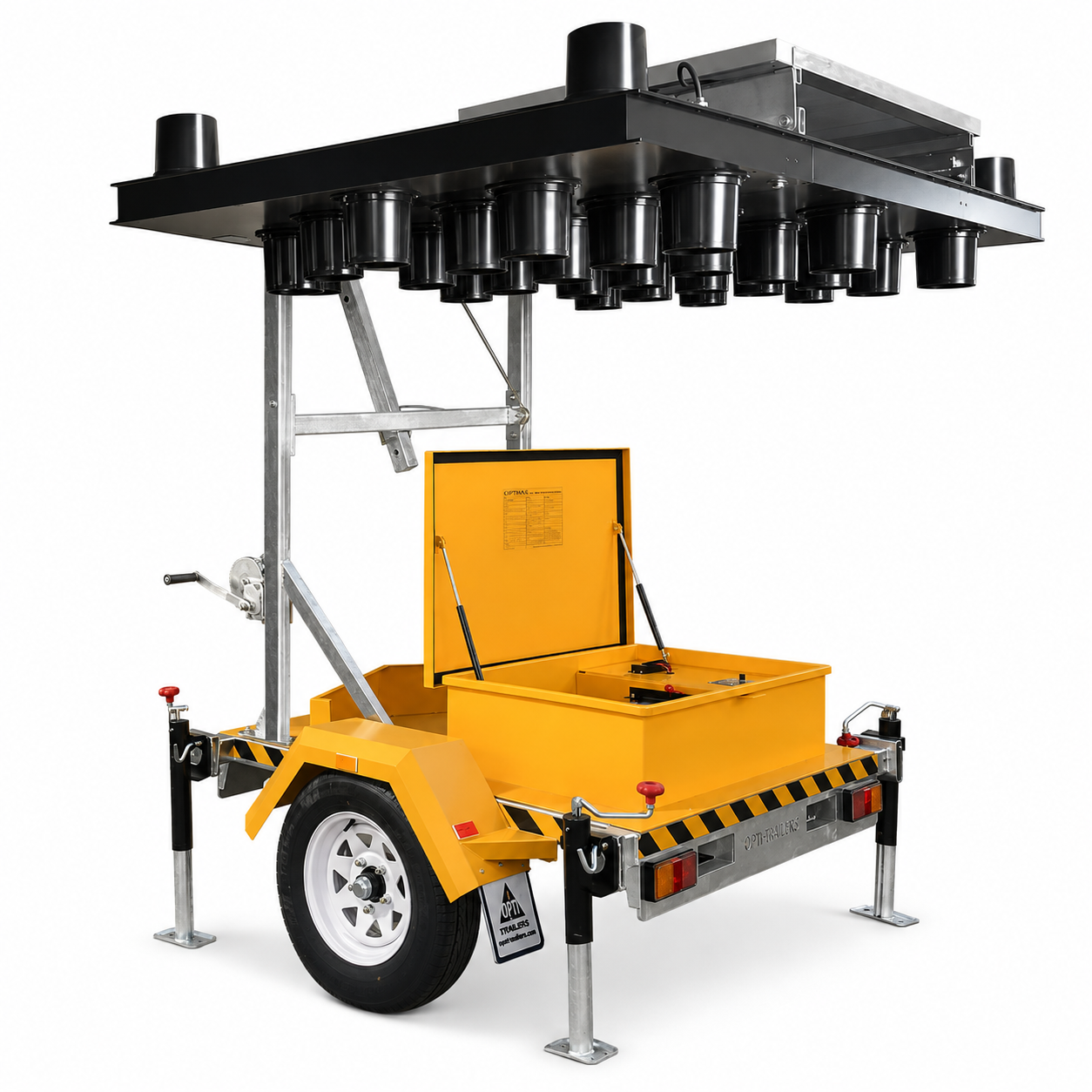
Start narrow and deep rather than wide and thin. A distributor who can quote a complete work zone, from cones to the arrow board, beats one who sells a little of everything. The table matches each line to its buyers and the rule that decides whether a product is accepted.
| Product line | Typical buyers | Rule to know |
|---|---|---|
| Cones, drums and delineators | Traffic control contractors, utilities, cities | MASH crash testing for federal-aid and state work |
| Work zone signs and stands | Traffic control contractors, public works crews | MUTCD Part 6 sizes and colors; MASH for sign stands |
| Arrow boards and message boards | Traffic control companies, contractors, event venues | MUTCD arrow board types and display modes |
| Permanent and custom signs | Cities, counties, sign shops, HOAs | MUTCD; state approved lists; Buy America on federal-aid work |
| Sign posts and light poles | Public works, contractors, electricians | Breakaway rules on state routes; Buy America for steel |
| Solar parking lot and street lights | Property managers, HOAs, cities, electricians | Light levels for the site; Buy America on federal-aid work |
| Solar light towers | Contractors, event producers, security | OSHA construction lighting levels |
Rules summarized from the MUTCD, the AASHTO/FHWA MASH implementation policy as adopted by GDOT and Caltrans, and FHWA's Buy America rule. See the sources at the end.
Rentals are worth adding to the mix. A contractor who needs an arrow board or a light tower for a three-month job may rent rather than buy, and a distributor who can arrange both keeps the customer either way.
Step 3: Learn the rules your customers buy against
MUTCD: what signs and devices must look like
The Manual on Uniform Traffic Control Devices sets the shapes, colors, sizes and placement of signs, markings and work zone devices on roads open to public travel. Most states adopt it directly; California publishes its own edition, the California MUTCD. The 11th Edition changed several rules for signs, beacons and work zones, which we cover in MUTCD 11th Edition: what changed. For work zones specifically, our guide to temporary traffic control zones shows which devices go in each part of the zone.
MASH: crash testing for work zone devices
Federal rules in 23 CFR 630 Subpart K require crashworthy devices on federal-aid projects. Under the AASHTO and FHWA implementation agreement, as Georgia DOT's policy puts it, temporary work zone devices manufactured after December 31, 2019 must have passed MASH testing; devices made on or before that date and tested to the older NCHRP Report 350 may be used through their normal service lives. California is tightening further: for State Highway System projects advertised on or after January 1, 2027, all Category 2 and Category 3 temporary traffic control devices must meet MASH 2016. Ask your supplier for the crash test or FHWA eligibility letter for every device you sell.
Buy America: where permanent products are made
Federal-aid highway projects carry Buy America rules. Steel and iron products have long had to be made in the U.S. FHWA's January 2025 final rule extends the requirement to manufactured products: for federal-aid projects obligated on or after October 1, 2026, every manufactured product permanently incorporated into the project must be manufactured in the U.S., and more than 55 percent of its components by cost must be U.S. made. The rule covers what stays in the ground, such as permanent signs, posts and lighting, not the temporary cones and trailers that leave with the contractor. That makes American-made sign options a real selling point for any distributor serving public agencies.
State approved products lists
Many state DOTs only accept products from approved lists. Caltrans keeps Authorized Material Lists, including one for signing and delineation materials. Georgia DOT keeps QPL-80, a list of approved highway sign manufacturers whose signs carry an approval decal or a G.D.T. stamp. Before you quote state work, check whether the specific product and maker are on the list.
Step 4: Decide what to stock and what to ship direct
Inventory is where distributors make or lose money. A simple rule works for most new distributors in this industry:
- Stock the fast movers: cones, delineators, common work zone signs, sign blanks and posts. Contractors call for these the day before a job.
- Ship direct the big-ticket items: arrow board trailers, message sign trailers, light towers and solar pole lights. Order them from a supplier warehouse near the jobsite so freight stays reasonable.
- Quote custom work: custom signs, solar flashing sign kits and large solar lighting projects are made or configured to order.
- Use rentals for short jobs: a customer who needs a trailer for a few months may be better served by a rental than a purchase.
Step 5: Choose the right supplier

Your supplier decides how fast you can quote, how complete your quotes are and whether your products pass inspection. Compare suppliers on these points:
- Distributor pricing that leaves you room to win bids and still make a margin.
- Warehouses near your customers so stock arrives on time and freight does not eat the margin.
- Breadth: traffic safety, work zone, solar lighting, signs, poles and posts from one account.
- American-made options for permanent products on Buy America work.
- Custom sign capability so you can sell finished signs, not just blanks.
- Compliance paperwork: MASH letters, spec sheets and certifications on request.
- Rentals for customers who only need equipment for one job.
That list is how we built our distributor program. LED Lighting Solutions stocks inventory in two U.S. warehouses, in California and Georgia, and offers aggressive distributor pricing on traffic safety, solar lighting and custom signage. We have more than 10 years in these industries, offer Made in the USA options including stock and custom signs produced in the USA, run a full-service sign design and print shop that makes custom signs with or without lighting kits, supply poles and posts, and rent solar light towers, portable message boards and arrow board trailers.
Ready for distributor pricing? Email sales@ledlighting-solutions.com with your company name, the product lines you sell and the regions you serve, or call 888-925-1966. See everything we offer distributors on our distributor program page.
Frequently asked questions
How do you become a distributor?
Form a business entity, get an EIN from the IRS, register for a seller's permit or sales tax number in your state, choose the product lines and customers you will serve, and open an account with a supplier that offers distributor pricing. In traffic safety, also learn the MUTCD, MASH and Buy America rules your customers buy against.
What are the benefits of becoming a distributor?
You buy at distributor pricing and resell at a markup, you own the customer relationship, and you can bundle related products into one quote. In traffic safety and solar lighting, one account can cover a contractor's whole job, from cones and signs to arrow boards and light towers.
How much does it cost to become a distributor?
The paperwork is inexpensive: an EIN is free from the IRS, and business formation and seller's permit fees depend on your state. The real cost is inventory, storage, insurance and freight. Shipping big-ticket items direct from your supplier keeps the starting investment lower.
How hard is it to become a distributor?
The setup takes weeks, not months. The harder part is building customers and learning the product rules. In this industry that means knowing which signs meet the MUTCD, which work zone devices are MASH tested, and when Buy America applies.
How do distributors make money?
Distributors earn the difference between the distributor price they pay and the price they sell at, minus freight, storage and overhead. Margin grows with volume, with bundled quotes, and with value-added work such as custom signs and rentals.
Do I need a license to sell traffic signs?
You need the same seller's permit or sales tax registration as any reseller. There is no separate federal license to sell signs, but public agencies often require MUTCD-compliant signs, and some state DOTs only accept signs from manufacturers on their approved lists, such as Georgia DOT's QPL-80.
What does MASH compliant mean for work zone devices?
MASH is the AASHTO Manual for Assessing Safety Hardware, the crash test standard for roadside and work zone hardware. Temporary work zone devices manufactured after December 31, 2019 must have passed MASH testing to be used on federal-aid projects, and California requires MASH 2016 for Category 2 and 3 devices on state highway projects advertised from January 1, 2027.
Does Buy America apply to traffic signs and solar lights?
On federal-aid highway projects obligated on or after October 1, 2026, manufactured products permanently incorporated into the project, such as permanent signs and lighting, must be manufactured in the U.S. with more than 55 percent U.S. content by component cost. Steel and iron must be made in the U.S. Temporary work zone devices that leave with the contractor are not permanently incorporated.
Sources
- IRS, Get an employer identification number
- CDTFA, Publication 107, Do You Need a California Seller's Permit?
- CDTFA-230, General Resale Certificate
- Georgia Department of Revenue, ST-5 Certificate of Exemption
- FHWA, Manual on Uniform Traffic Control Devices
- 23 CFR 630 Subpart K, Temporary Traffic Control Devices
- Georgia DOT, Implementation of AASHTO-MASH criteria for roadside safety hardware (amended October 15, 2018)
- Caltrans, Implementation of MASH for temporary traffic control devices (May 7, 2026)
- FHWA, Buy America Requirements for Manufactured Products, 90 FR 2932 (January 14, 2025)
- Caltrans, Authorized Material Lists
- Georgia DOT, QPL-80 Highway Sign Manufacturers