My Cart: 0 item(s)
_2.png "Shadows ReadyTheme")
Temporary Traffic Control (TTC) Zones Explained: The Four Areas, the Devices, and the Plan
Key Takeaways
- A temporary traffic control (TTC) zone is any section of road where normal traffic patterns are changed for work, an incident, or an event. MUTCD Part 6 governs how it is set up.
- Every TTC zone has four areas in order: the advance warning area, the transition area (taper), the activity area, and the termination area. Most crashes trace to a compressed advance warning area or a badly formed taper.
- The first area of a TTC zone is the advance warning area. On a 55 mph road its first sign sits at least 1,500 feet before the taper.
- TTC devices include signs, arrow boards, changeable message signs, cones, drums, barricades, warning lights, flaggers with STOP/SLOW paddles, and portable lighting. Every device on a public road must meet MUTCD Part 6 and be crashworthy.
- A temporary traffic control plan (TTCP) is the drawing and narrative that shows where each device goes. Most agencies accept the MUTCD typical applications for routine work and require a site-specific plan for anything unusual.
- Work zone crashes killed 891 people in 2022 (FHWA); the share involving speeding rose. Feedback devices such as radar speed signs are the direct answer.
What is a temporary traffic control zone?
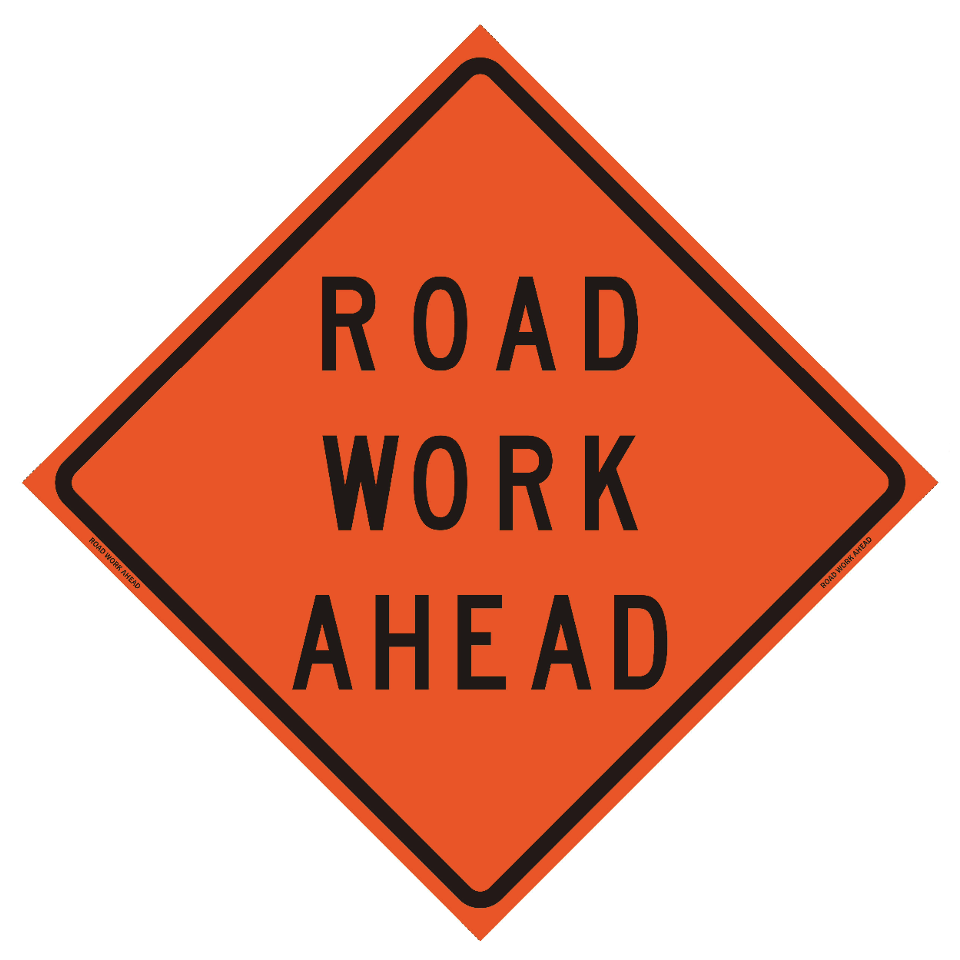
A temporary traffic control zone, or TTC zone, is the stretch of road where drivers, pedestrians, and cyclists are guided around work, an incident, or a special event with temporary devices rather than the permanent signs and markings. Utility crews opening a trench, a lane closure for resurfacing, a crash scene, and a parade route are all TTC zones. Some states, notably Florida, call the same thing maintenance of traffic (MOT).
The rules live in Part 6 of the Manual on Uniform Traffic Control Devices (MUTCD), which the 11th Edition (effective January 18, 2024) reorganized and updated. Part 6 applies on every road open to public travel; contractors working on private property still follow it because it is the accepted standard of care. For what changed in the current edition, see MUTCD 11th Edition: what changed.
The four areas of a TTC zone
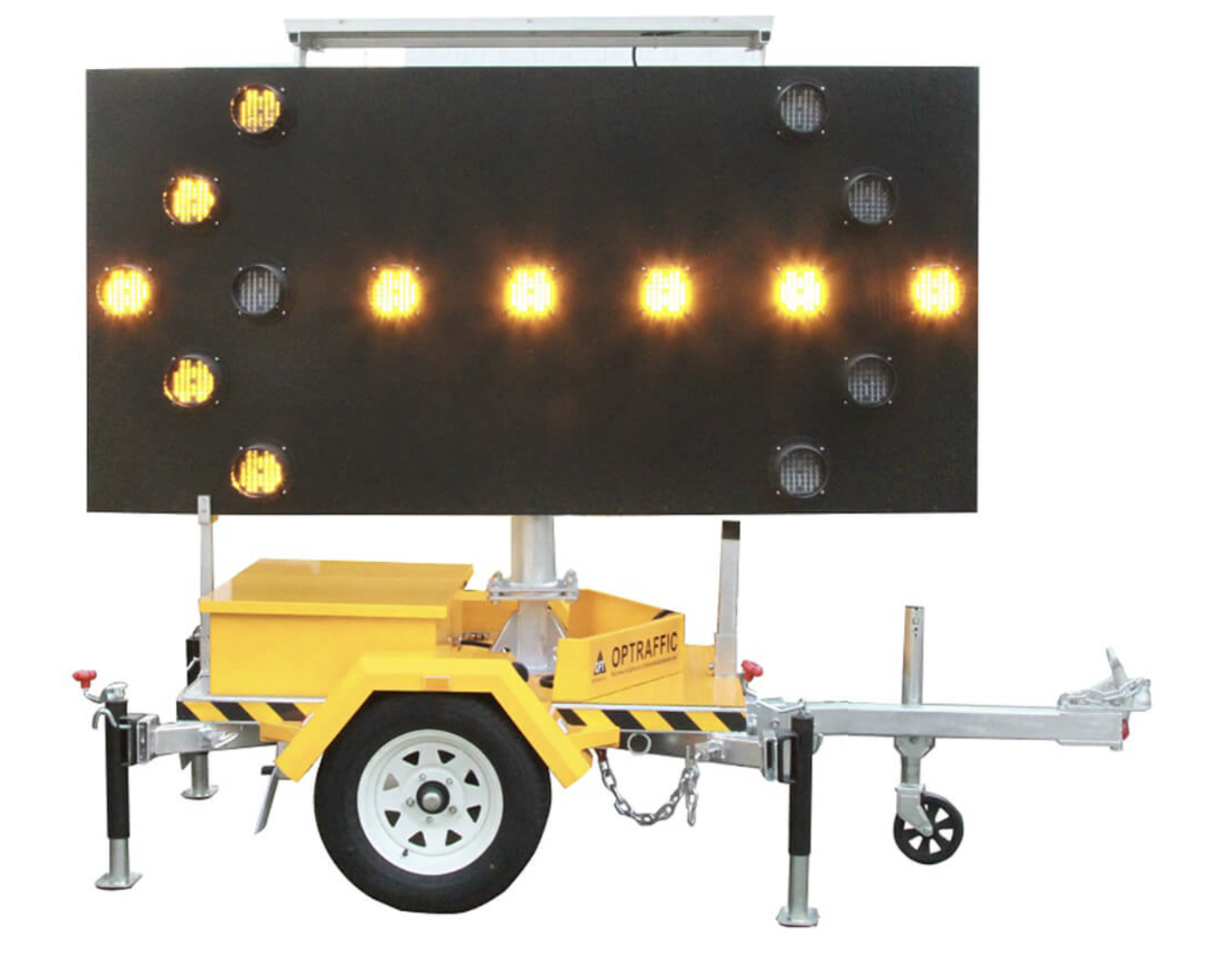
The MUTCD divides every TTC zone into four areas that appear in the same order in the direction of travel.
| Area | Purpose | Typical devices | Length guidance |
|---|---|---|---|
| 1. Advance warning area | Tell drivers what is ahead and what to do | ROAD WORK AHEAD and lane closure signs, changeable message sign trailers, arrow boards, radar speed signs | Urban low-speed: 100 ft or more per sign; rural 55 mph: first sign at least 1,500 ft before the taper, three-sign series spaced 500 ft or more |
| 2. Transition area | Move traffic out of its normal path with a taper | Cones and delineators, drums, Type I and II barricades, arrow board at the start of the taper | Merging taper length L = W × S for 45 mph and above (W = lane width in ft, S = speed in mph); L = W × S² ÷ 60 below 45 mph |
| 3. Activity area | The work space, the buffer that protects it, and the traffic space beside it | Channelizing devices along the work space, warning lights at night, portable light towers, flaggers with STOP/SLOW paddles | Longitudinal buffer roughly equal to stopping sight distance for the speed limit; never store equipment in the buffer |
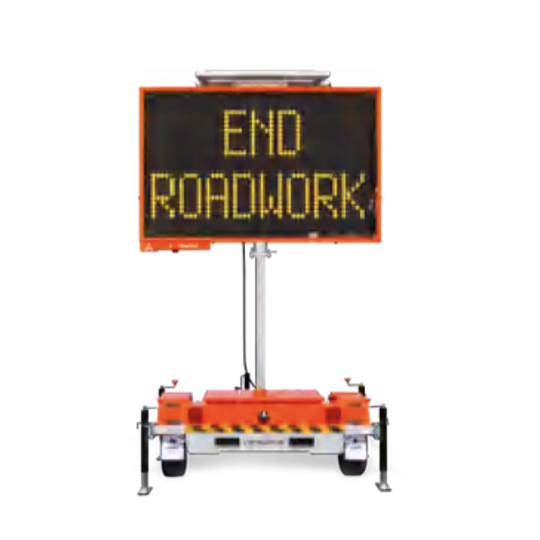
| 4. Termination area | Return traffic to its normal path | END ROAD WORK sign, downstream taper of cones | Downstream taper 50 ft per lane, END ROAD WORK sign about 500 ft past the work |
Formulas and spacings are from MUTCD Part 6, Section 6C (11th Edition). State supplements may require longer distances.
The two mistakes that show up in crash reviews again and again are an advance warning area that starts too close to the taper, and a taper that is too short for the speed. A 12-foot lane on a 55 mph road needs a merging taper of 660 feet. Crews that set 200 feet of cones are asking drivers to do the impossible.
Temporary traffic control devices
_640x640_2.jpg)
TTC devices are the physical tools that carry out the plan. All of them are covered in MUTCD Part 6, and anything that can be struck by a vehicle must meet the crashworthiness requirements of the Manual for Assessing Safety Hardware (MASH).
- Signs. Orange diamond warning signs (ROAD WORK AHEAD, LANE CLOSED AHEAD, FLAGGER AHEAD) and regulatory signs for reduced limits. Roll-up signs on portable stands are standard for short-term work; rigid work zone signs for longer projects.
- Arrow boards. Required for lane closures on multi-lane roads at 45 mph and above; recommended everywhere. Solar arrow board trailers run for weeks without fuel.
- Changeable message signs. Portable message board trailers carry the specifics a static sign cannot: dates, times, detour routes, and queue warnings.
- Channelizing devices. Cones (28 inch minimum on high-speed roads), tubular delineators, drums, and Type I, II, and III barricades. Type III barricades close a road; Types I and II channelize.
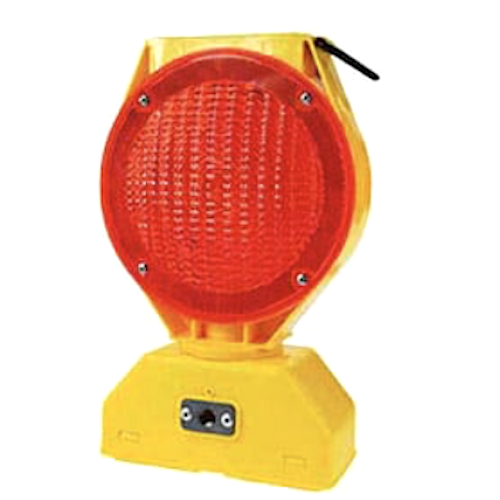
- Warning lights. Type A, B, and C barricade lights and solar flashing beacons for night work.
- Speed feedback. Radar speed signs at the start of the reduced-speed section; see how radar speed signs work.
- Flagging. Flaggers with STOP/SLOW paddles (LED paddles for night) and high-visibility apparel.
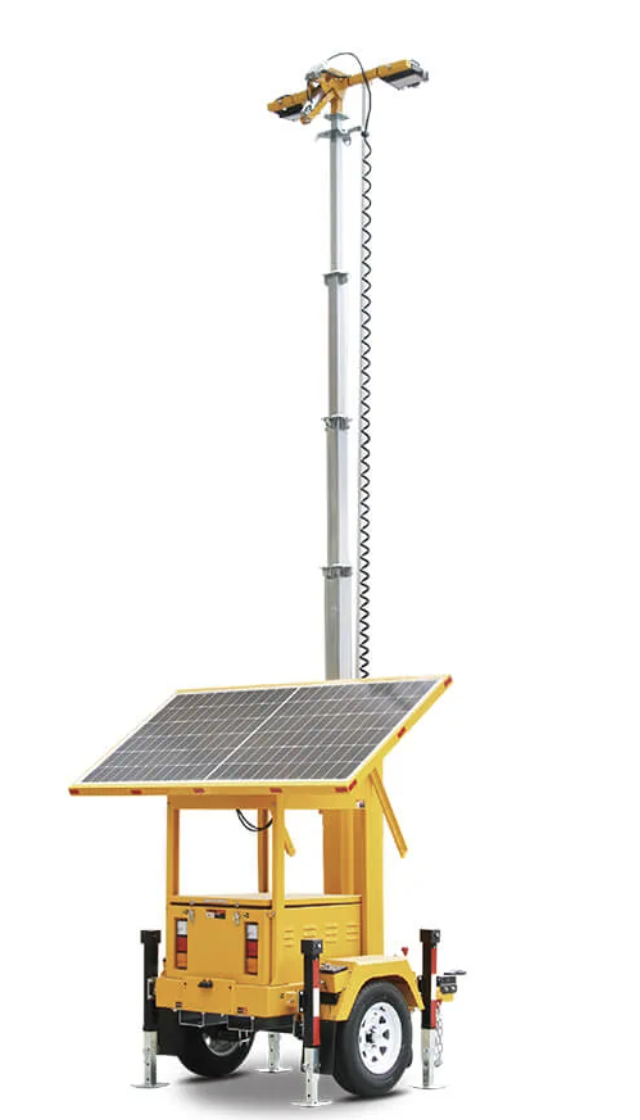
- Lighting. Solar light towers and work lights positioned to light the work space without blinding drivers.
What is not a TTC device: personal vehicles used as barriers, hand-painted signs, and homemade cones. If it is not in Part 6 and not crash-tested, it does not belong in the zone.
What is a temporary traffic control plan?
A temporary traffic control plan (TTCP, or TCP) is the document that shows how traffic will be handled through the zone: a drawing of the four areas with every device located and dimensioned, plus notes on hours, phasing, pedestrian routes, and who is responsible for inspection. On federally funded projects it is part of the broader transportation management plan (TMP), which also covers public information and operations strategies.
Three levels are common:
- Typical application. MUTCD Part 6 includes dozens of standard diagrams (the "TA" figures) for routine situations such as a shoulder closure or a single-lane closure on a two-lane road. Many agencies accept a reference to the TA number for short-duration work.
- Site-specific plan. Required when conditions differ from the typical application: curves, intersections, schools, night work, or multi-phase projects. Drawn to scale by a certified TTC designer.
- Transportation management plan. The full package for significant projects, including detour analysis and public outreach.
State DOTs publish their own manuals and certification requirements (Florida's MOT training, Oregon's TTC handbook, PennDOT Publication 213, and so on). Check the state where the work happens; a plan that satisfies the MUTCD may still need state-specific sign codes.
Why TTC zones are dangerous, in numbers
Work zone crashes killed 891 people in the United States in 2022, down 7 percent from 956 in 2021, while the share of fatal work zone crashes involving speeding and commercial vehicles rose, according to the FHWA Work Zone Facts and Statistics page. Most victims are drivers and passengers, not workers. The National Work Zone Safety Information Clearinghouse puts the comprehensive cost of work zone crashes at $41 billion for 2024.
The full breakdown, including worker fatality data from NIOSH, is in our work zone safety statistics and equipment guide. The short version: the rising speeding share means the advance warning area and speed feedback are where the next improvement will come from.
Setting up a compliant zone: a checklist
- Identify the typical application or get a site-specific plan drawn.
- Measure and mark the advance warning sign locations and the taper length before placing a single cone.
- Place devices in order from the advance warning area toward the work space (drivers should never meet a taper before a sign).
- Put the arrow board at the start of the taper, on the closed lane's shoulder, and the radar speed sign at the start of the reduced-speed section.
- Light the work space and the flagger station for night work; aim lights away from oncoming traffic.
- Inspect at the start of every shift and after storms; replace damaged or dirty devices.
- Remove devices in reverse order, work space first.
Everything in this list is solar and portable, which means a two-person crew can set up a compliant single-lane closure in under an hour. Send LED Lighting Solutions the road speed, number of lanes, and duration and we will spec the package.
Frequently Asked Questions
What is a TTC zone?
A temporary traffic control zone is any section of road where normal traffic patterns are changed for work, an incident, or an event, and where temporary devices such as signs, cones, arrow boards, and flaggers guide traffic. MUTCD Part 6 sets the rules.
What is the first area of a temporary traffic control zone?
The advance warning area. It is the first section drivers reach, and its signs and message boards tell them what is ahead and what to do. It is followed by the transition area, the activity area, and the termination area.
What is a temporary traffic control plan?
A TTC plan is the drawing and notes that show where every device in the zone is placed, along with hours, phasing, and pedestrian routes. Routine work can reference an MUTCD typical application; unusual conditions need a site-specific plan.
Which is not considered a temporary traffic control device?
Anything not covered by MUTCD Part 6 and not crash-tested: personal vehicles used as barriers, homemade signs, or improvised cones. Approved devices include signs, arrow boards, changeable message signs, cones, drums, barricades, warning lights, and flagger paddles.
What is the purpose of a TMP?
A transportation management plan covers a whole project's approach to traffic: the TTC plan for the zone itself, plus detours, public information, and operations strategies such as incident response. Federal-aid projects require one.
How long should a taper be in a work zone?
For speeds of 45 mph and above, the merging taper length in feet equals the lane width in feet multiplied by the speed in mph, so a 12-foot lane at 55 mph needs 660 feet. Below 45 mph, use lane width times speed squared divided by 60.
Do temporary traffic control devices have to be MUTCD compliant?
Yes, on any road open to public travel. Devices must match Part 6 designs and, if they can be struck by a vehicle, meet MASH crashworthiness requirements. Following Part 6 on private property is the accepted standard of care.
Need help choosing? LED Lighting Solutions stocks MUTCD-compliant solar signs, lighting, and work zone equipment and ships from our U.S. warehouse. Contact our team or call for volume pricing.