My Cart: 0 item(s)
_2.png "Shadows ReadyTheme")
MUTCD 11th Edition: What Changed for Signs, LED Signs, Speed Limits, and Work Zones
Key Takeaways
- The Manual on Uniform Traffic Control Devices (MUTCD) is the federal standard for every sign, marking, and signal on U.S. public roads. The 11th Edition was adopted December 19, 2023, took effect January 18, 2024, and was updated by Revision 1 in December 2025.
- It replaced the 2009 edition (the 10th, with revisions) after 14 years, and states had two years from the effective date to adopt it or a substantially compliant state manual.
- The biggest product-level change: flashing LED borders on signs and rectangular rapid flashing beacons (RRFBs) moved from interim approvals into the main text, so agencies no longer need a request to use them.
- Speed limit setting no longer relies only on the 85th percentile speed; engineers may weigh crash history, pedestrian activity, and land use.
- A new Part 5 covers traffic control devices for automated vehicles, and Part 6 (temporary traffic control) gained updated guidance for work zones, including portable changeable message signs.
- The MUTCD applies to public roads open to travel. Private property is not bound by it, but following it is the accepted standard of care.
What the MUTCD is and why it matters

The Manual on Uniform Traffic Control Devices, published by the Federal Highway Administration (FHWA), defines the design, placement, and use of every traffic sign, pavement marking, and signal on roads open to public travel in the United States. Its authority comes from federal regulation (23 CFR 655), and every state either adopts it directly or publishes a state supplement that is in substantial conformance.
For a municipality, contractor, or property manager, the MUTCD is the answer to "what does a stop sign have to look like," "how big must a school crossing sign be," and "what devices can I use in a work zone." Buying MUTCD-compliant products keeps you eligible for federal funding and gives you the standard-of-care defense if a crash leads to a claim.
Key dates for the 11th Edition

| Date | Event |
|---|---|
| December 2009 | 2009 Edition published (last full edition before the 11th) |
| December 14, 2020 | Notice of Proposed Amendments published; more than 17,000 public comments followed |
| December 19, 2023 | Final Rule adopting the 11th Edition published in the Federal Register |
| January 18, 2024 | 11th Edition effective date |
| January 18, 2026 | Deadline for states to adopt the 11th Edition or a substantially conforming state manual |
| December 2025 | Revision 1 to the 11th Edition issued; FHWA now lists the current version as "11th Edition with Revision 1" |
Source: FHWA MUTCD website, September 2026.
The manual is free as a PDF from FHWA's MUTCD site. Printed copies are sold by ATSSA, AASHTO, and ITE.
Change 1: LED-enhanced signs and RRFBs are now in the manual
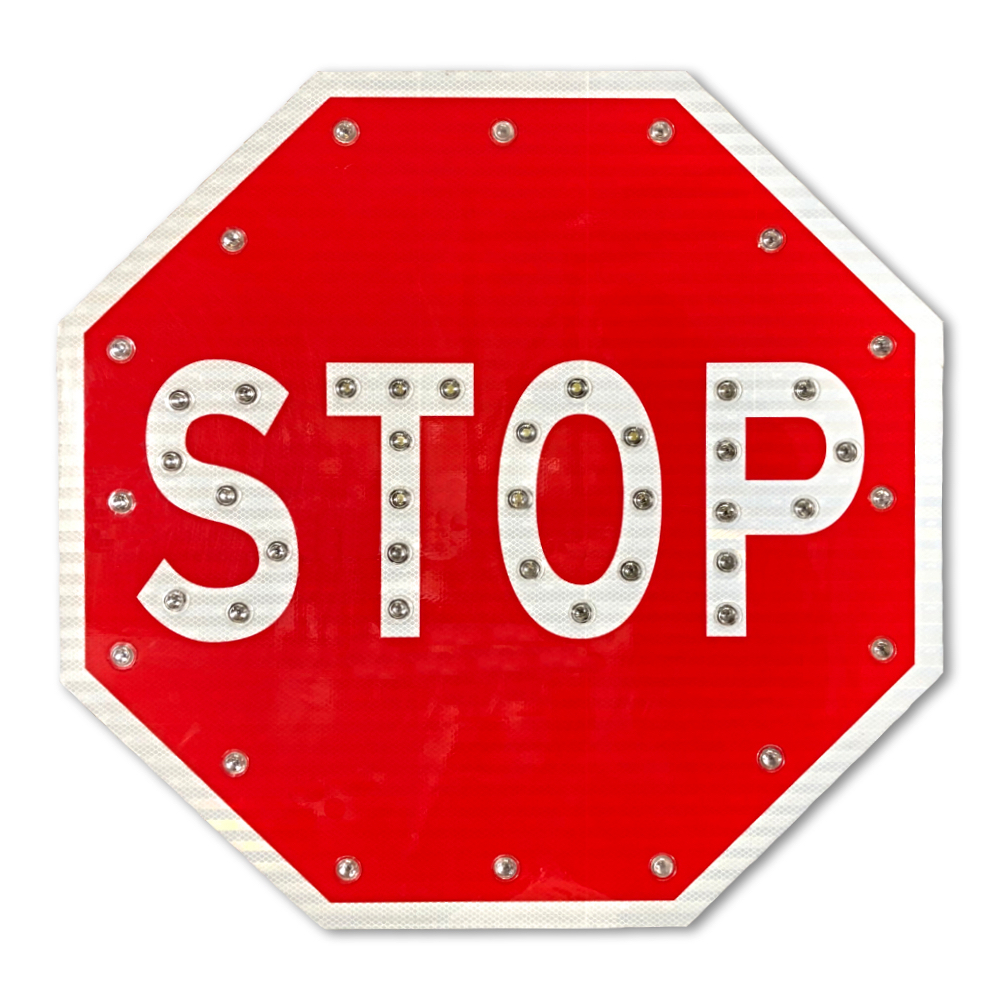
For years, flashing LED borders on stop and warning signs and rectangular rapid flashing beacons at crosswalks were allowed only under FHWA interim approvals that each agency had to request. The 11th Edition folds both into the main text.
What that means in practice:
- Agencies can specify a flashing LED stop sign or a flashing crosswalk sign as a standard device.
- LEDs must match the sign color (red on stop and yield signs, yellow or fluorescent yellow-green on warning and school signs) and flash at 50 to 60 flashes per minute.
- RRFBs are used at uncontrolled marked crosswalks and are activated by pedestrians rather than flashing continuously.
Our guide to flashing LED stop signs covers the crash data behind LED-enhanced signs, and the push-button crosswalk systems category covers RRFB-style crossings.
Change 2: A more flexible approach to setting speed limits
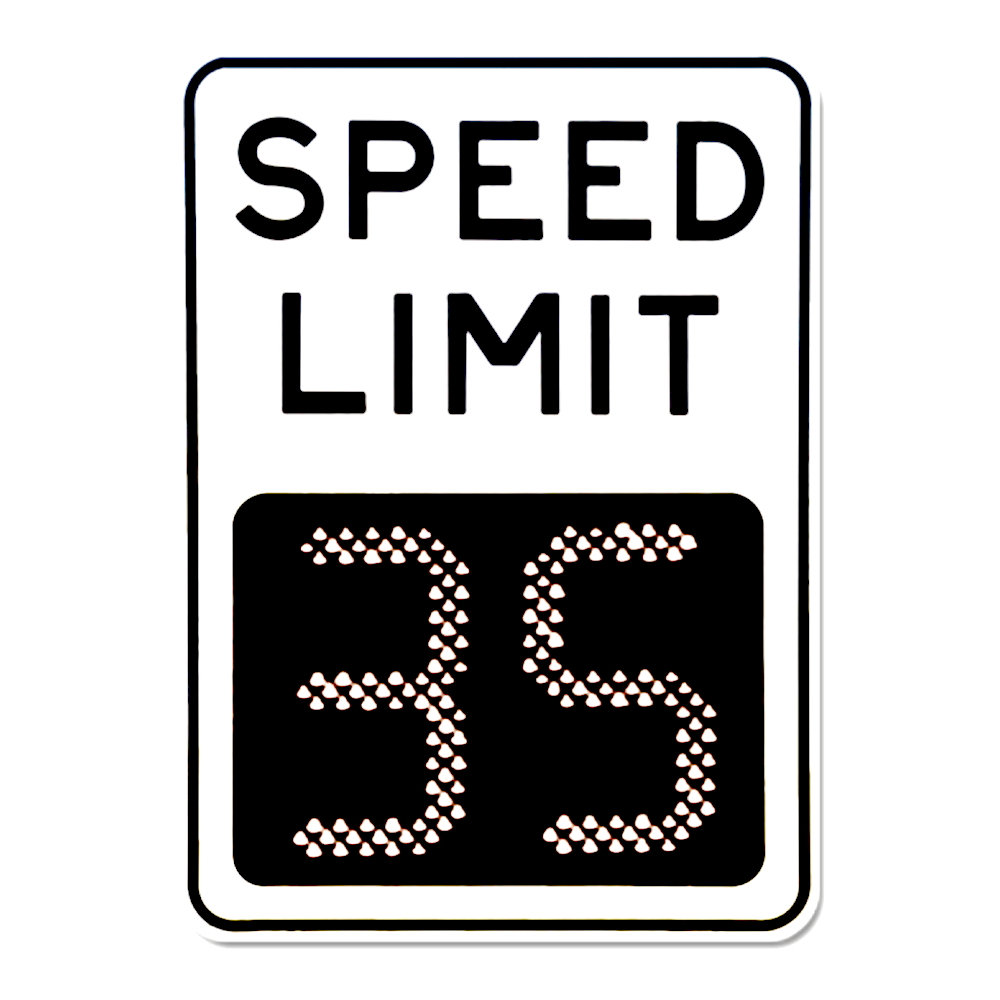
The 2009 manual leaned heavily on the 85th percentile speed, the speed at or below which 85 percent of drivers travel, when setting limits. Critics argued this let fast drivers set the rules. The 11th Edition keeps the 85th percentile as one input but explicitly allows engineers to weigh crash history, pedestrian and bicycle activity, roadside development, and other context, particularly in urban and suburban areas.
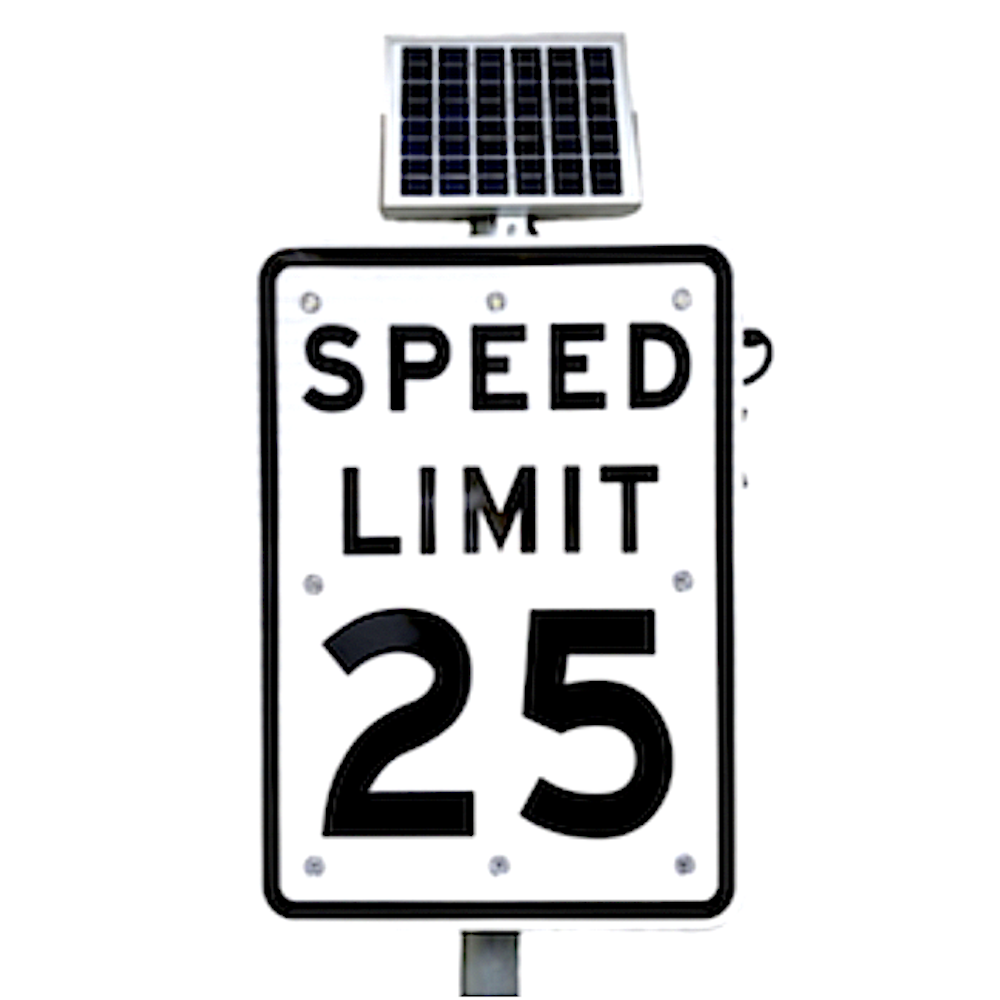
For agencies that lower limits under the new guidance, feedback devices such as radar speed signs and solar flashing speed limit signs are the tools that make the new number stick.
Change 3: Pedestrians, bicycles, and school areas

The 11th Edition expands guidance on crosswalk markings (high-visibility patterns such as ladder and continental are now preferred at uncontrolled crossings), adds and revises bicycle facility devices in Part 9, and updates Part 7 for school areas including the S1-1 school crossing sign assemblies that many districts use with solar flashing school crossing signs.
Change 4: Automated vehicles get their own part

New Part 5, Traffic Control Device Considerations for Automated Vehicles, is short and mostly advisory. It encourages consistent, well-maintained signs and markings so that machine vision systems can read them, which in practice means retiring faded sheeting and keeping markings crisp. This is the first time the manual has addressed vehicles that read signs without a human.
Change 5: Temporary traffic control (Part 6) for work zones

Part 6 was reorganized and updated. Highlights for anyone who sets up work zones:
- Clarified provisions for portable changeable message signs and arrow boards, including placement and message length.
- Updated guidance on pedestrian accommodation through work zones, including detectable barricades.
- Continued emphasis on high-visibility apparel and on the flagger devices in STOP/SLOW paddles.
- Standards for Type I, II, and III barricades, cones and delineators, and warning lights remain, with updated figures.
See our work zone safety statistics and equipment guide for the numbers that make this section urgent, and Temporary traffic control zones explained for how the four areas of a TTC zone are set up.
Does the MUTCD apply to private property?
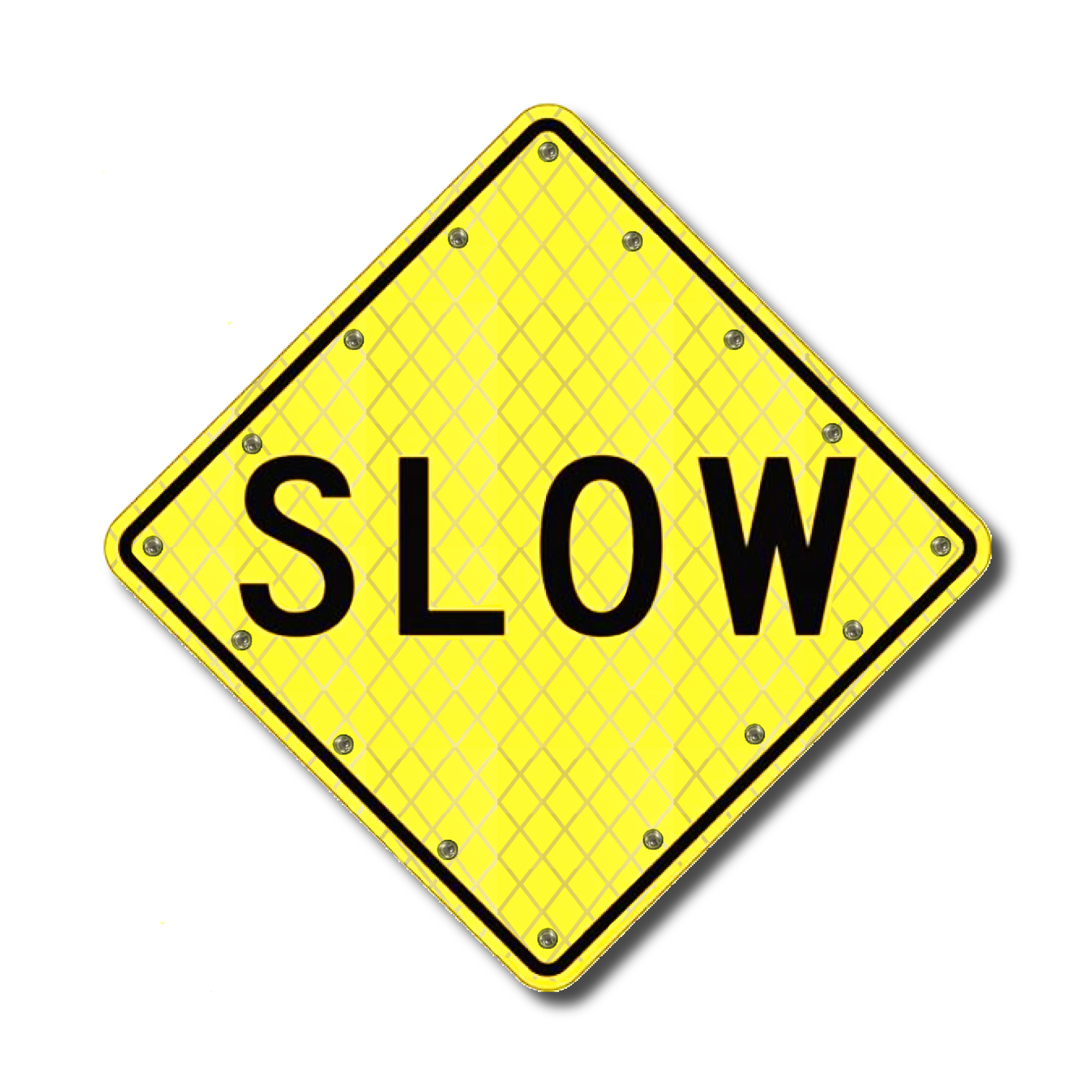
Legally, no. The MUTCD governs roads open to public travel, which includes public streets and, in many states, private roads and parking facilities open to the public such as shopping centers. Purely private property such as a gated plant yard is outside its scope.
In practice, following the MUTCD on private property is the norm because drivers respond to what they recognize, and because "we used the national standard" is the strongest position if a crash leads to litigation. Every sign LED Lighting Solutions sells in the traffic control signs catalog is built to MUTCD dimensions and sheeting requirements.
What agencies and contractors should do now
- Confirm which manual your state has adopted (the national 11th Edition, or a state MUTCD such as California's or Texas's, which follow on their own schedule).
- Inventory signs with faded sheeting or non-standard designs; Part 5 raises the bar for machine readability.
- Replace interim-approval paperwork for LED signs and RRFBs with the 11th Edition citations.
- Review work zone plans against the revised Part 6.
- Specify compliant products. When in doubt, ask us and we will point to the section that applies.
Frequently Asked Questions
What is the latest version of the MUTCD?
The 11th Edition with Revision 1, dated December 2025. The 11th Edition itself was adopted December 19, 2023 and took effect January 18, 2024.
What are the major changes in the MUTCD 11th Edition?
Flashing LED sign borders and RRFBs are now standard devices, speed limit setting can weigh crash history and pedestrian activity rather than only the 85th percentile speed, a new Part 5 addresses automated vehicles, and Part 6 on temporary traffic control was reorganized and updated.
When did the MUTCD 11th Edition come out?
The Final Rule was published December 19, 2023 and the edition became effective January 18, 2024. States had until January 18, 2026 to adopt it or a substantially conforming state manual.
Is the MUTCD legally binding?
Yes, on roads open to public travel. Federal regulation 23 CFR 655 makes it the national standard, and states adopt it by law. Compliance is also a condition of federal highway funding.
Does the MUTCD apply to parking lots?
Parking facilities open to the public are treated as roads open to public travel in many states and in FHWA's interpretation, so the MUTCD generally applies. Purely private, restricted-access property is outside its scope, though following it is still recommended.
Does the MUTCD apply to private roads?
It applies to private roads open to public travel, such as roads in shopping centers or open residential developments. Gated or restricted private roads are not covered, but using MUTCD-compliant devices is the accepted standard of care.
Where can I download the MUTCD 11th Edition?
FHWA publishes the complete manual and individual parts as free PDFs at mutcd.fhwa.dot.gov. Printed copies are sold by ATSSA, AASHTO, and ITE.
Need help choosing? LED Lighting Solutions stocks MUTCD-compliant solar signs, lighting, and work zone equipment and ships from our U.S. warehouse. Contact our team or call for volume pricing.