My Cart: 0 item(s)
_2.png "Shadows ReadyTheme")
Work Zone Safety Statistics and the Equipment That Prevents Crashes
Key Takeaways
- Work zone crashes killed 891 people in the United States in 2022, down 7 percent from 956 in 2021, while the share of fatal work zone crashes involving speeding and commercial vehicles rose, according to FHWA.
- FHWA estimates one work zone death for every 4 billion vehicle-miles traveled and for every $112 million of roadway construction. Work zones also cause about 10 percent of national congestion and 470 million hours of delay a year.
- Workers are the minority of victims; most people killed in work zone crashes are drivers and passengers. NIOSH counted 2,222 workers killed at road construction sites from 2003 to 2020, about 123 per year, most struck by vehicles or equipment.
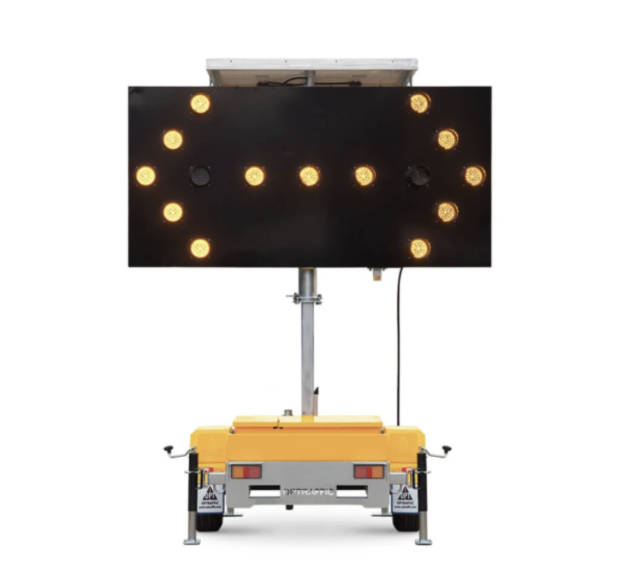
- The devices that work are the ones that reach drivers early: arrow boards and changeable message signs well upstream, flashing beacons and barricades at the taper, and radar speed signs inside the zone.
- MUTCD Part 6 sets the standard for temporary traffic control. The 11th Edition, effective January 18, 2024, updated it.
Work zone crash statistics
| Measure | Figure | Source |
|---|---|---|
| Work zone fatalities, 2021 | 956 (highest since 2005) | FHWA / NHTSA FARS |
| Work zone fatalities, 2022 | 891, a 7% decrease | FHWA Work Zone Facts and Statistics |
| Change in overall roadway fatalities, 2021 to 2022 | Down 1.7% | FHWA |
| Fatal work zone crashes involving speeding, 2022 | Share increased from 2021 | FHWA |
| Fatal work zone crashes involving commercial vehicles, 2022 | Share increased from 2021 | FHWA |
| Pedestrian and bicyclist work zone deaths, 2022 | Down 16.6% from 2021 | FHWA |
| Work zone fatalities per vehicle-miles traveled | One per 4 billion VMT | FHWA |
| Work zone fatalities per construction spending | One per $112 million | FHWA |
| Comprehensive societal cost of work zone crashes, 2024 | $41 billion | National Work Zone Safety Information Clearinghouse |
| Share of national congestion caused by work zones | About 10%, 470 million vehicle-hours of delay | National Work Zone Safety Information Clearinghouse |
| Road construction workers killed, 2003 to 2020 | 2,222, about 123 per year | NIOSH |
FHWA figures from the Office of Operations Work Zone Facts and Statistics page and the National Work Zone Safety Information Clearinghouse, accessed September 2026. FARS 2023 and 2024 counts are being finalized; check the Clearinghouse for the latest year.
Two points in this data change how you should think about work zone safety. First, most of the people who die in work zone crashes are drivers and passengers, not workers, so devices that protect motorists protect everyone. Second, the speeding share is rising even as total deaths fell, which points directly at speed management inside the zone.
Why work zone crashes happen
- Speed. Drivers enter the zone too fast for a lane shift or a queue. Rear-end crashes into stopped traffic are the most common fatal type.
- Late recognition. Advance warning is too close, too small, or lost in visual clutter, so the driver has no time to react.
- Distraction. Phone use compounds every other factor.
- Night work. Reduced visibility, fatigued drivers, and impaired drivers concentrate in the overnight hours when much roadwork happens.
- Commercial vehicles. Long stopping distances make trucks over-represented in fatal rear-end work zone crashes.
- Intrusions. Vehicles entering the work space through an inadequate taper or a gap in barricades.
The equipment that addresses each cause
.jpg)
| Problem | Device | Why it works |
|---|---|---|
| Late recognition | Arrow boards and changeable message sign trailers | Visible a half mile out; tell drivers what to do, not just that something is ahead |
| Speed | Radar speed signs | Feedback reduces speeds 5 to 18% in studies; logs data for enforcement planning |
| Missed regulatory signs | Flashing stop signs and solar flashing warning signs | LED borders cut run-throughs by about half |
| Intrusions | Type I, II, III barricades, cones and delineators | Define the taper and the work space physically |
| Night visibility | Barricade lights, solar flashing beacons, solar light towers | Mark the zone and light the work area without generator noise |
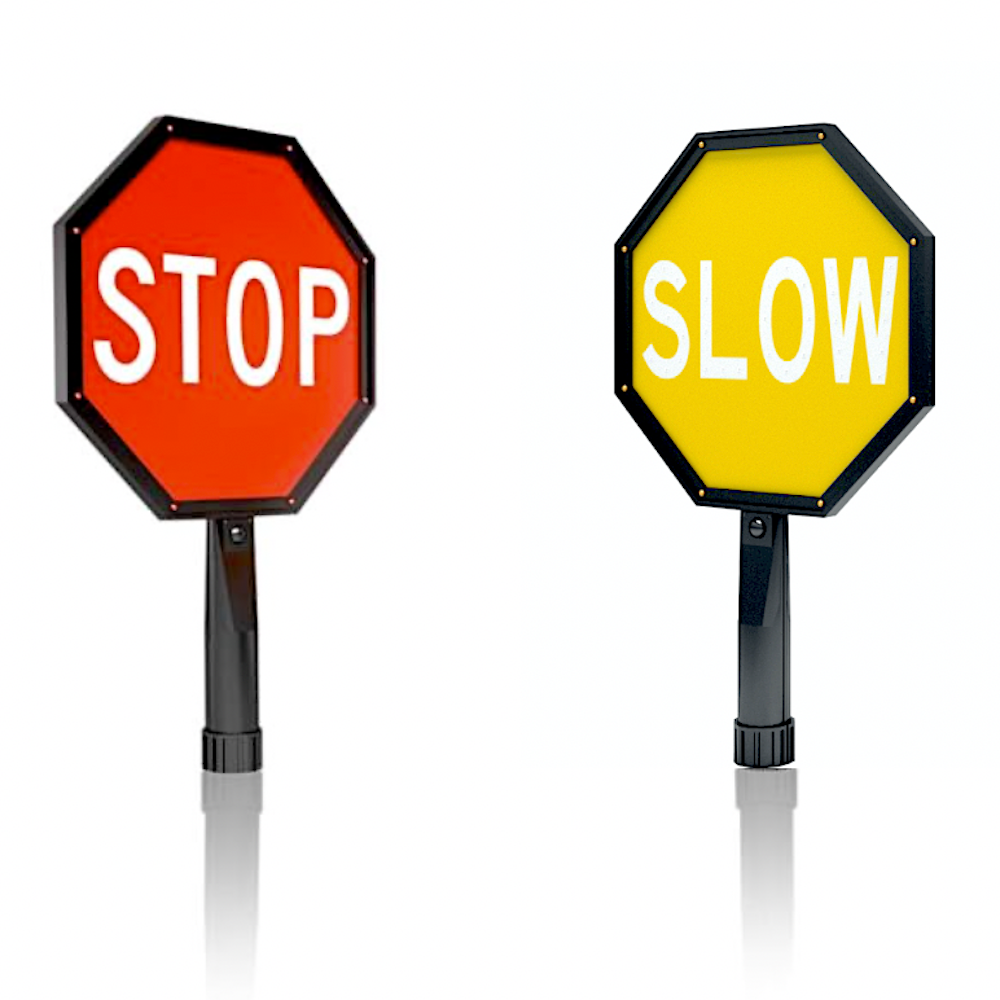
| Flagger exposure | LED STOP/SLOW paddles, high-visibility apparel | Make the flagger the most visible object on the road |
| Detours and lane closures | Work zone signs, roll-up signs | MUTCD Part 6 sign sequences drivers recognize |
Setting up advance warning that drivers actually see
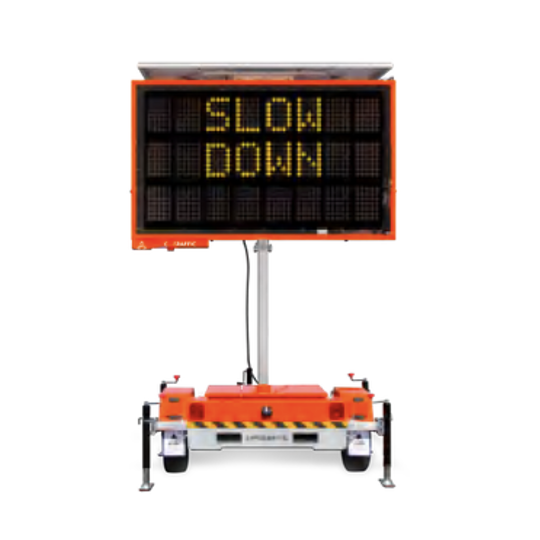
MUTCD Part 6 lays out the advance warning area, transition (taper), activity area, and termination area; our TTC zones guide walks through each with the taper formulas. The most common failure is compressing the advance warning area. On a 55 mph road the first warning sign should be at least 1,500 feet before the taper, with additional signs at intervals, and an arrow board or message sign at the start of the taper. Solar arrow board and message trailers make that spacing easy because nothing needs power.
Inside the zone, a radar speed sign on a trailer at the point where the reduced limit begins is the single most effective speed device. It also records every vehicle, which gives you evidence when you ask for enforcement.
Work zone safety tips for drivers
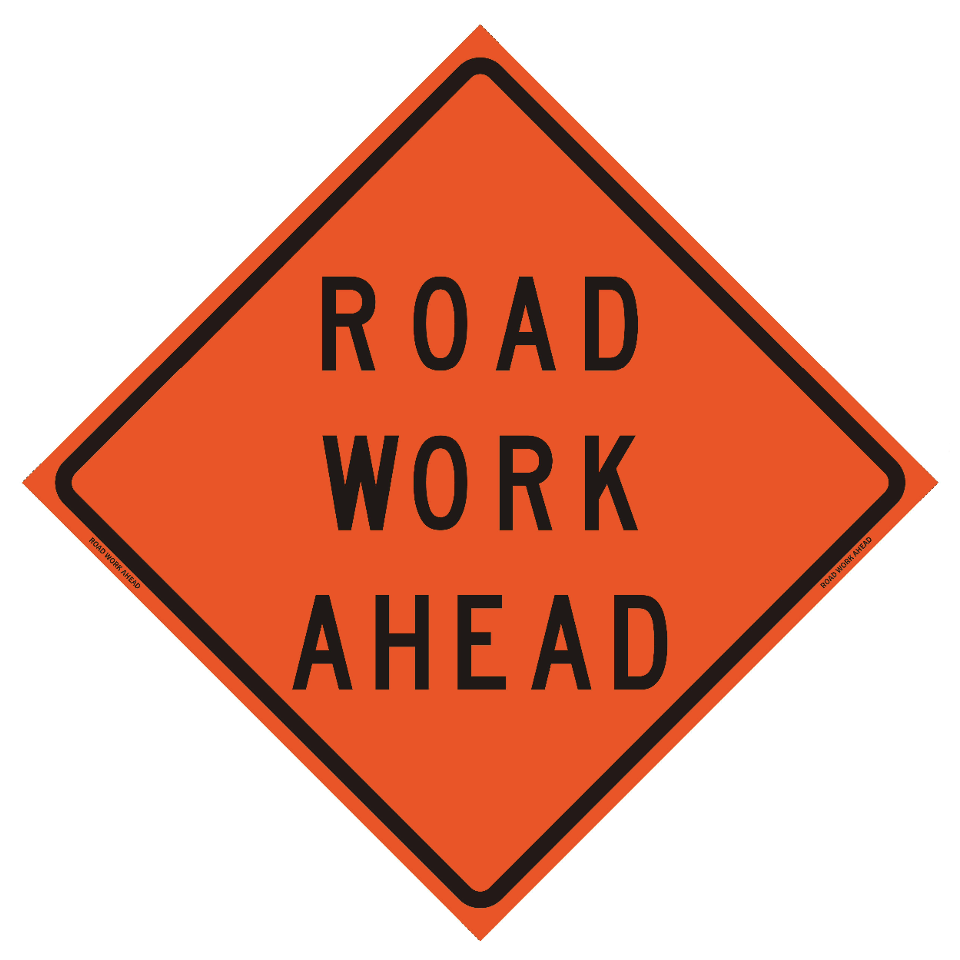
- Slow down at the first orange sign, not at the cones.
- Leave extra following distance; rear-end crashes are the top fatal type.
- Merge early when signs say a lane is closing.
- Put the phone away; distraction in a work zone leaves no margin.
- Expect workers and equipment close to the lane, especially at night.
- Obey flaggers; a STOP paddle carries the force of a stop sign.
National Work Zone Awareness Week takes place each April. It is a good time to review equipment inventories before the summer construction season.
Compliance
Every device in a work zone on a public road must meet MUTCD Part 6 and, for products that can be struck by vehicles, the crashworthiness requirements of the Manual for Assessing Safety Hardware (MASH). Our work zone products are built to those standards. For the changes in the current manual, see MUTCD 11th Edition: what changed.
Need a package for a project? Contact LED Lighting Solutions with the roadway speed, duration, and lane configuration and we will spec the arrow boards, signs, barricades, and lighting.
Frequently Asked Questions
How many people die in work zone crashes each year?
891 people died in U.S. work zone crashes in 2022, down 7 percent from 956 in 2021, according to FHWA using NHTSA FARS data. Most were drivers and passengers rather than workers.
What causes most work zone crashes?
Speeding and rear-end collisions into slowed or stopped traffic, made worse by distraction, night conditions, and the long stopping distances of commercial vehicles. FHWA reports the share of fatal work zone crashes involving speeding increased in 2022.
How many road construction workers are killed each year?
NIOSH counted 2,222 worker deaths at road construction sites from 2003 to 2020, an average of about 123 per year, most struck by vehicles or construction equipment.
What equipment is required in a work zone?
MUTCD Part 6 requires advance warning signs, a marked transition with channelizing devices such as cones, drums, or barricades, and appropriate lighting and flagging. Arrow boards and changeable message signs are required for lane closures on higher-speed roads.
When is National Work Zone Awareness Week?
It is held each April at the start of the construction season. The 2026 event ran in late April; check workzonesafety.org for next year's dates.
Do radar speed signs work in work zones?
Yes. Trailer-mounted radar speed signs reduce speeds by 5 to 18 percent in published studies and log every vehicle's speed, which supports enforcement requests.
Are solar work zone devices reliable?
Yes. Solar arrow boards, message trailers, beacons, and light towers run for days without sun and eliminate generator refueling and noise. They are standard on state DOT projects.
Need help choosing? LED Lighting Solutions stocks MUTCD-compliant solar signs, lighting, and work zone equipment and ships from our U.S. warehouse. Contact our team or call for volume pricing.